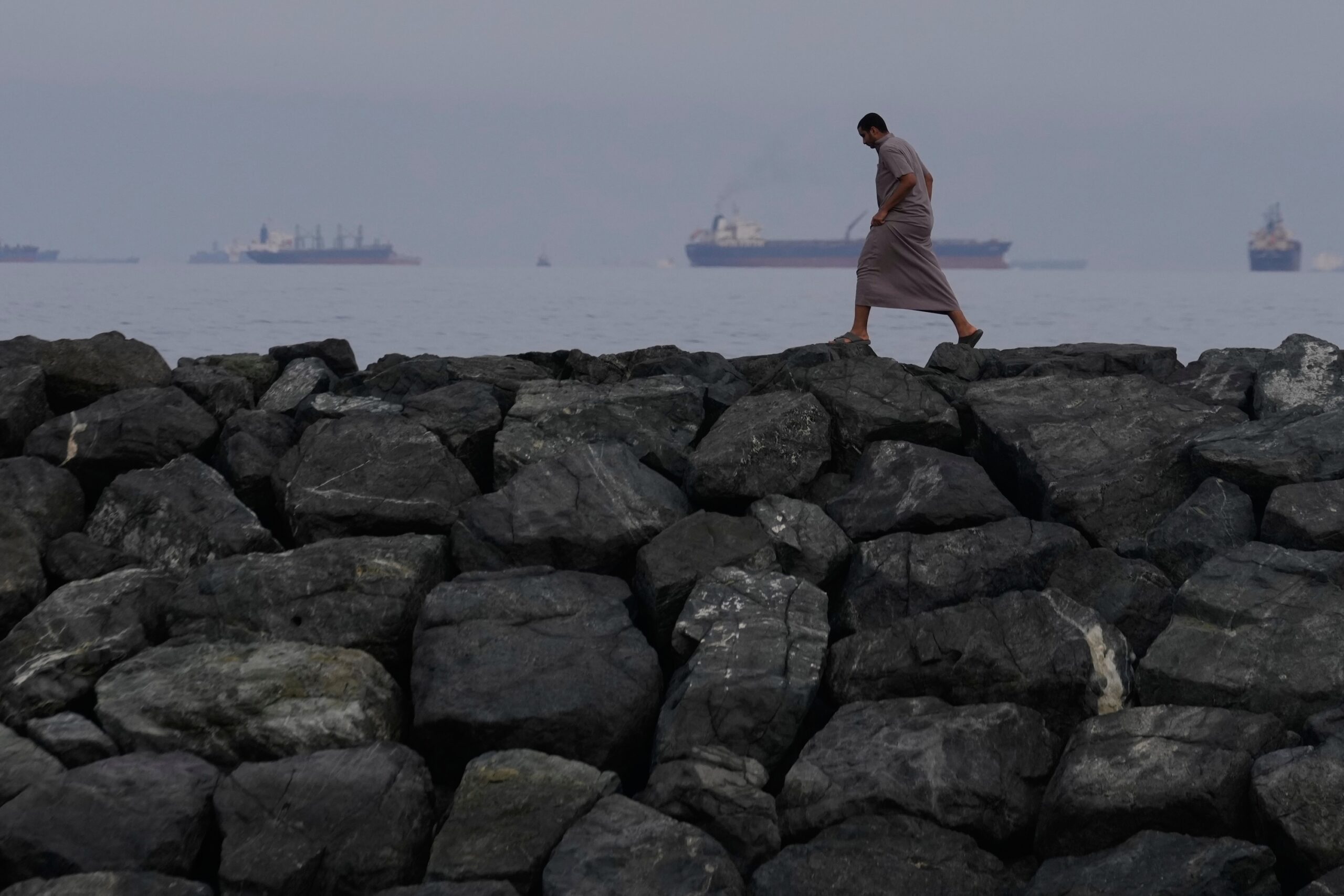
Tensions in the Persian Gulf escalated significantly on March 15, 2024, when President Donald Trump announced a series of airstrikes targeting the Iranian island of Kharg Island. This military operation is aimed at addressing growing concerns over global oil supplies and ensuring the safe passage of shipping through the crucial Strait of Hormuz. In a post on Truth Social, Trump described the bombing as “one of the most powerful raids in the history of the Middle East,” claiming it successfully eliminated “every military target” on the island.
Despite the aggressive nature of the airstrikes, Trump indicated he refrained from targeting the island’s oil infrastructure. He cautioned that any interference with maritime activities in the Strait could lead him to reconsider this restraint. The airstrikes seem to be a direct response to remarks from Iran’s new supreme leader, Mojtaba Khamenei, who declared intentions to obstruct shipping in the vital waterway. Khamenei’s statement was broadcast on Iranian state television and reflects a broader strategy from Iran to leverage its geographic position to exert pressure on its adversaries.
The Strait of Hormuz is a critical maritime route, facilitating around 20% of the world’s petroleum and liquefied natural gas trade. Since the onset of the current conflict, reports indicate that over a dozen ships have been attacked in the Gulf. The Islamic Revolutionary Guard Corps has openly stated that it will target any vessel attempting to navigate through the strait, heightening fears of further disruptions.
Economic repercussions have already begun to manifest. Following the announcement of the airstrikes, Brent crude oil futures surged past $100 a barrel, a significant increase from approximately $70 prior to the conflict. Industry experts warn that Iran’s tactics, if left unchecked, could lead to chaos in the Gulf and have severe implications for global markets.
According to Scarlett Suarez, a senior intelligence analyst at Dryad Global, “These strikes target commercial vessels regardless of flag or ownership, fueling widespread fear and uncertainty.” This disruption strategy involves a range of asymmetric attacks, which can affect neutral third-party ships as well as those linked to Gulf neighbors.
The historical context of this conflict is crucial. During the 1980s, the Tanker War phase of the Iran-Iraq War saw Iran mining the waters of the Strait of Hormuz. A notable incident in 1988 involved an Iranian mine severely damaging the USS Samuel B. Roberts, leading to a significant American retaliation known as Operation Praying Mantis, which resulted in the destruction of several Iranian naval assets.
Today, Iran’s maritime strategy incorporates various elements, including fast-attack boats, unmanned vessels, drones, and shore-based missile systems. Retired Navy Captain Bill Hamblet, now the editor-in-chief of the U.S. Naval Institute’s Proceedings, characterized the current threat as “multidimensional.” He emphasized the difficulties in detecting and clearing naval mines, which include limpet mines and moored mines that can be activated upon contact.
In a Pentagon briefing, Secretary of Defense Pete Hegseth stated there is “no clear evidence” of new mines being placed in the Strait of Hormuz. He described Iran’s actions as indicative of “sheer desperation” and reassured that the U.S. has been prepared to manage these threats.
As the situation develops, the international community continues to monitor the implications of this military action on global oil supply and regional stability. The stakes remain high as both nations navigate a volatile landscape marked by economic and military tensions.