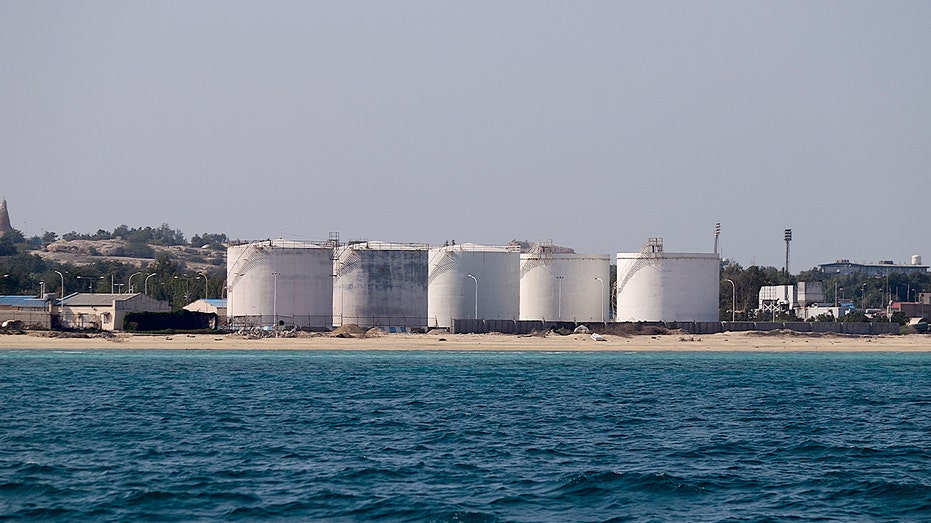
Tensions between the United States and Iran may escalate as the Trump administration reportedly weighs the possibility of a direct strike on Kharg Island, a critical oil hub for Iran. Kharg Island, located near the Strait of Hormuz, is responsible for approximately 90% of Iran’s crude oil exports, making it a strategic target that could significantly impact global energy markets.
According to retired Army Brig. Gen. Mark Kimmitt, the strike’s implications could extend beyond just military action. On March 9, during an appearance on “The Claman Countdown,” Kimmitt noted that an assault on Kharg Island could provoke broader regional instability and further assaults on energy infrastructure in the area. He stated, “I don’t think a significant number of boots on the ground… is in the offing,” but highlighted that an attack on Kharg could be a serious consideration.
The significance of Kharg Island extends beyond its immediate tactical importance. It handles around 95% of Iran’s crude oil exports and serves as the world’s largest open oil terminal. Dr. Sara Vakhshouri, a global energy analyst and founder of SVB Energy International, emphasized that targeting Kharg Island aligns with Washington’s “energy dominance” doctrine. This doctrine aims to leverage U.S. energy strength as a geopolitical tool, a policy central to Trump’s first term.
Vakhshouri stated that disrupting operations at Kharg Island would likely lead to a significant oil price spike and market instability. “Interrupting Iran’s main export terminal would likely trigger a major oil price spike, market instability, and regional retaliation against energy infrastructure,” she explained.
The potential for a U.S. strike on Kharg Island also raises concerns about energy supply disruptions. Currently, 15 to 20 million barrels of oil are estimated to be in storage at the terminal, with export capabilities reaching up to 5 million barrels per day. Should the terminal be struck, Vakhshouri warned that the resultant loss could shift risks toward further attacks on regional energy facilities and disrupt oil flows through the Strait of Hormuz, a vital maritime route for global oil trade.
Kharg Island is situated in the northern Persian Gulf, approximately 15 miles from Iran’s mainland. Tankers departing the terminal navigate through the Strait of Hormuz, which accounts for about one-fifth of the world’s oil trade. This critical chokepoint has seen increased military activity, as tensions between the U.S. and Iran continue to rise.
The Trump administration’s consideration of military options follows a long history of Trump’s rhetoric regarding Iran. In a 1988 interview, Trump suggested that a military response to Iranian aggression should include targeting Kharg Island, stating, “One bullet shot at one of our men or ships, and I’d do a number on Kharg Island. I’d go in and take it.”
With the potential for increased military action looming, the situation remains fluid. Vakhshouri highlighted that the market’s response to any military action would depend heavily on Iran’s retaliatory measures. “The certain outcome, however, would be prolonged volatility and uncertainty in the market, driven by fears of further retaliation or an extended cycle of disruption,” she concluded.
As the international community watches these developments closely, the White House has yet to provide official commentary on the situation. The implications of U.S. action against Kharg Island could reverberate throughout the global energy market, with analysts and policymakers weighing the risks and benefits of such a significant military engagement.