Honda’s K20 and K24 engines have gained a reputation for their reliability and performance, powering a variety of popular vehicles. These inline four-cylinder engines have been featured in models such as the Honda Civic, Accord, Integra, and RSX. Beyond Honda and Acura, these engines have also found their way into vehicles from other manufacturers, further extending their reach. Engine swaps utilizing Honda’s K-series engines have surged in popularity, often rivaling the well-known Chevy LS swaps. Their abundance, dependability, and extensive aftermarket support make them appealing for enthusiasts looking to boost performance in older Honda models, as well as in vehicles like the BMW E30, Datsun 510, and Mazda Miata.
The K20 engine made its debut in 2001 and was soon followed by the K24 in the next model year. The K24’s increased displacement stems from modifications that expanded the bore to 87 millimeters and stroke to 99 millimeters, compared to the K20’s bore and stroke of 86 millimeters. This longer stroke required a taller cylinder, increasing the deck height from the K20’s 8.3 inches to 9.1 inches for the K24. Notably, both engines feature an all-aluminum construction, which means the K24 only weighs nine pounds more than the K20, which weighs 403 pounds.
Performance Variations of the K20 and K24 Engines
Within Honda’s K-series, various configurations exist, leading to different performance outputs. The K20 engine options include the K20A, K20A2, and the later-model K20Z1. Similarly, the K24 has numerous variants, labeled from A to Z. From their factory settings, K24 variants produced outputs ranging from 160 horsepower to 206 horsepower and 182 pound-feet of torque, particularly noted in the K24W7 engine found in the 2015-2020 Acura TLX models.
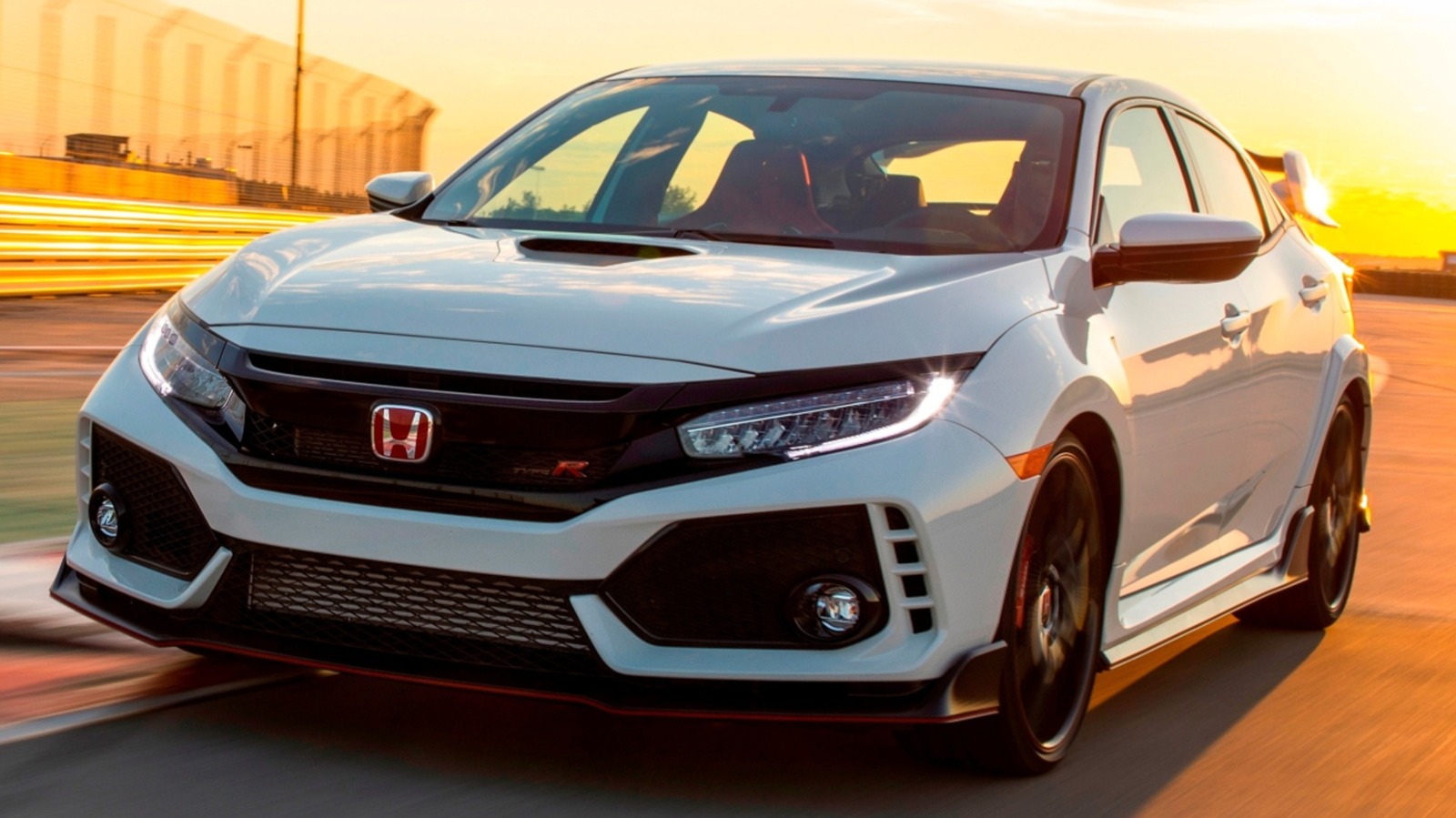
In contrast, the K20 engine starts at a minimum of 156 horsepower, with the most powerful variant being the K20C1. This engine, introduced in the 2017 Honda Civic Type R, boasts an impressive 316 horsepower and 295 pound-feet of torque. The added power of the K20C1 is attributed to its turbocharged design, a feature not found in any K24 variant.
Engine builders working with the K20 have reported achieving over 1,000 horsepower using the stock crankshaft, while upgraded components can push this figure to as high as 1,400 horsepower. For the K24, adding a turbocharger to a stock engine can yield approximately 500 horsepower. With enhancements, K24 engines can reach outputs nearing 1,600 horsepower. The potential for high power outputs explains the growing trend of swapping K24 engines into various vehicles, including an intriguing K24-powered Ferrari built by Stanceworks.
Ultimately, whether in a Honda, a Ferrari, or even a Mazda Miata, the K20 and K24 engines continue to capture the attention of automotive enthusiasts. Their blend of performance, reliability, and adaptability ensures that they remain popular choices for engine swaps and modifications across a wide range of vehicles.