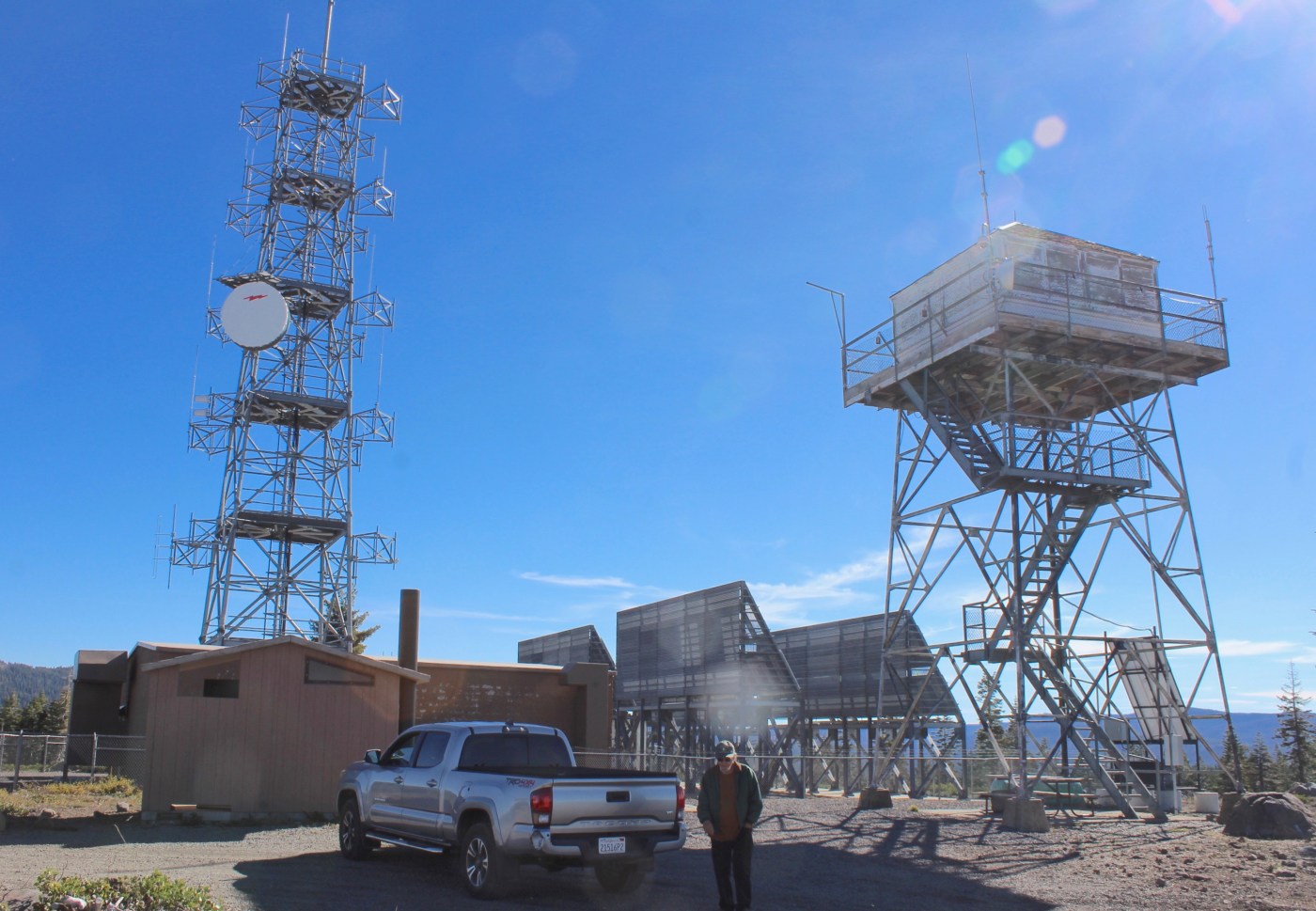
A retired Forest Service employee has voiced strong support for continuing the operation of the Colby Mountain Lookout, emphasizing the irreplaceable value of human oversight in wildfire detection. In a letter addressed to Lassen National Forest Supervisor Rick Hobson, Gary McHargue, who served for 31 years and hired lookout Ken Jordan in 1985, argues that technology such as camera systems cannot compete with the trained human eye.
McHargue, who retired in 2000, outlined the importance of maintaining a staffed lookout as opposed to relying solely on cameras. He detailed how a well-trained lookout can assess the terrain, recognize weather changes, and understand the dynamics of public use during peak periods, such as holidays or hunting seasons. He pointed out that a significant portion of the detection area around Colby Mountain is obscured, particularly to the north where Deer Creek Canyon lies. The lookout’s structure cannot adequately cover this area, necessitating human observation.
“By the time a smoke was visible from the lookout, it would be considered ‘Top Smoke,’ which indicates a large fire requiring a more extensive initial attack,” McHargue stated. He recounted how he instructed lookouts to periodically scout the canyon rim with binoculars, aiming to detect small fires before they escalate.
The letter highlights the limitations of stationary camera systems. According to McHargue, cameras cannot adjust their angles or reposition, which is crucial during active lightning storms. An experienced lookout can pinpoint lightning strikes and relay precise coordinates to dispatch for effective response. “Keying in on accurate fire locations is much more efficient than randomly flying over an affected district,” he noted.
Additionally, McHargue shared insights from a past incident where a “Sleeper Start” was detected months after a lightning storm, illustrating the critical role of human observation in wildfire management. He is concerned that wildfire detection efforts have become undervalued, with funding increasingly directed towards initial attack units like Hotshots and Engine Crews.
While acknowledging the significance of these resources, he argued for the equal importance of lookout towers and fire prevention units. “A minimal investment in early detection and prevention is a sound choice when compared to the costs associated with suppressing major wildfire events,” he explained.
During a recent visit to the Colby Mountain Lookout, McHargue found the structure still sound, although he noted some necessary repairs and maintenance. He expressed concern about what he perceives as a lack of appreciation for wildfire detection capabilities.
McHargue concluded his letter by emphasizing the existing strengths of the Lassen National Forest and the Almanor Ranger District, which include a trained professional with decades of experience and a historic lookout tower that has been operational for nearly 90 years. He believes that prioritizing human lookouts is a beneficial decision for both the forest and the surrounding communities.
The ongoing discussion about wildfire detection methods raises important considerations about balancing technology with human expertise, particularly in regions vulnerable to wildfires. As the debate unfolds, the perspectives of seasoned professionals like McHargue will be critical in shaping future wildfire management strategies.