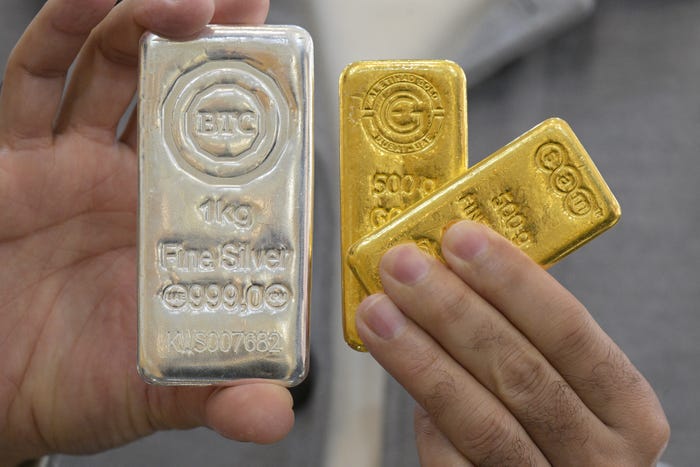
URGENT UPDATE: Hedge funds are rapidly shifting their investments as gold and silver prices plummet. New data confirms that before the recent crash, hedge funds were already reducing their exposure to precious metals, reallocating capital into energy markets amid rising volatility.
Spot gold is currently trading at approximately $4,829 per troy ounce, marking a staggering decline of over 10% from its record high of $5,500 just last week. Meanwhile, silver prices have plummeted to about $83.40 per ounce, more than 30% below its peak of $121 per ounce. This sudden downturn has left investors reeling and markets in shock.
According to Ole Hansen, head of commodity strategy at Saxo Bank, the latest data from the Commodity Futures Trading Commission indicates a significant rotation out of precious metals, including gold and silver, as hedge funds have cut long positions in response to heightened market volatility. The report, which captures investors’ holdings in U.S. futures markets, shows that long positions in crude oil futures have surged to their highest levels since August, as oil prices have begun to rise due to geopolitical tensions and supply concerns.
Investors have been reallocating capital into energy markets, with U.S. West Texas Intermediate crude oil futures currently trading around $62 per barrel, an increase of 8% this year. This shift is being driven by fears of supply disruption following the Trump administration’s actions in Venezuela, alongside renewed tensions with Iran and severe winter storms impacting the U.S.
The dramatic sell-off in precious metals has created a stark contrast in trading strategies. Silver’s crowded rally had left it particularly vulnerable when the market turned, as noted by Hansen. The significant reduction in silver bets has left hedge funds with “plenty of room” to re-enter the market once volatility stabilizes and the technical outlook improves, although analysts caution that this recovery may take time following the recent meltdown.
The causes behind the silver crash are multifaceted. Jeffrey Christian, a veteran commodities analyst, points out that the rally in December and January was driven more by speculative trading than by traditional investors seeking to hold physical metals. He emphasized that extreme trading volumes across futures, options, and ETFs contributed to the chaotic market conditions.
Hansen warns that while the fundamental drivers for gold and silver—such as geopolitical tensions and central bank purchasing—remain intact, the recent correction serves as a warning for traders driven by momentum and fear of missing out (FOMO). “When gold and silver become hot topics at dinner tables and workplaces, it often signals that a particular phase of the rally is nearing exhaustion,” he stated.
As the situation evolves, market watchers and investors will be closely monitoring these developments. The volatility in the precious metals market is a critical reminder of the risks involved in speculative trading and the importance of strategic positioning in the face of uncertainty.
Stay tuned for more updates as this story continues to unfold.