The European Organization for Nuclear Research (CERN) has initiated a project to repurpose waste heat from its Large Hadron Collider (LHC) to provide heating for local homes and businesses. This innovative approach not only enhances the facility’s sustainability efforts but also benefits the community surrounding the particle accelerator.
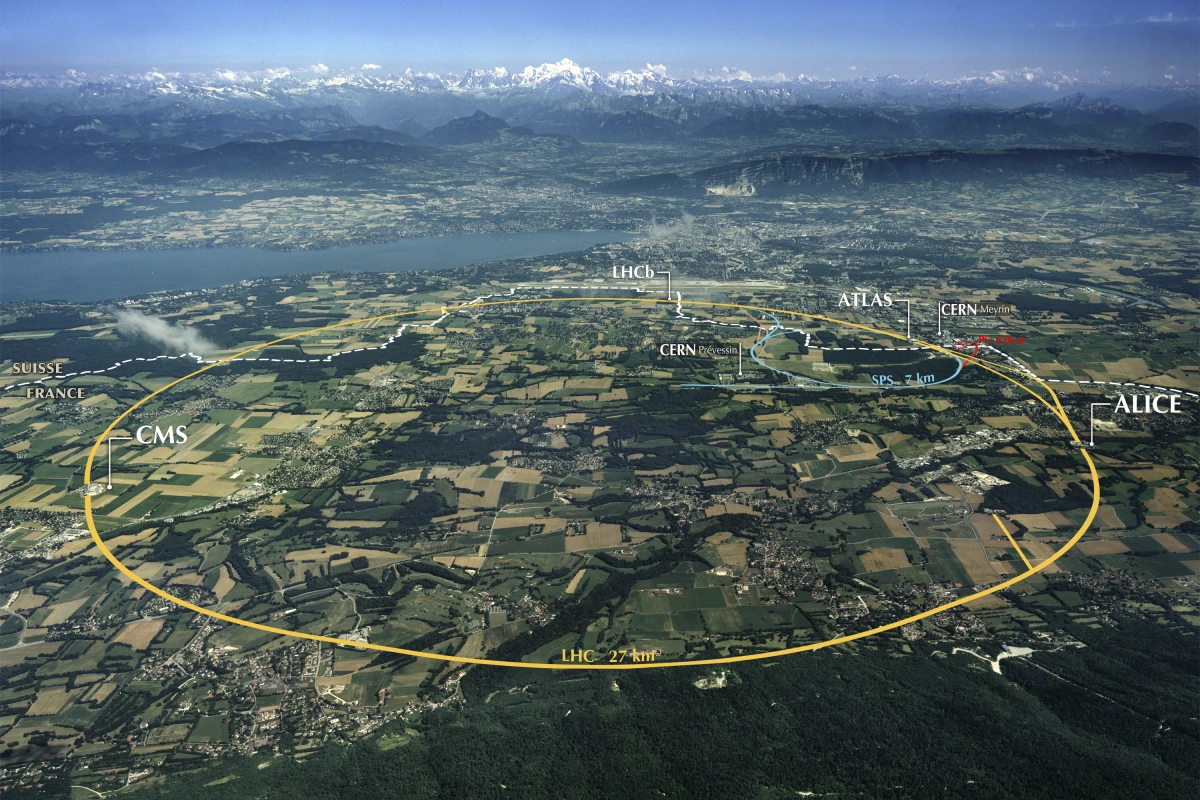
The LHC, which has a circumference of 26.7 kilometers (16.6 miles), is renowned for its groundbreaking discoveries, including the Higgs boson. Operating at high energy levels requires substantial power, with the collider consuming between 600 and 750 GWh annually. This energy-intensive process generates significant amounts of waste heat, which in the past was released into the atmosphere via cooling towers.
CERN’s new initiative aims to utilize this waste heat effectively. The project, associated with the Large Hadron Collider beauty (LHCb) experiment, involves installing a heat exchanger at Point 8 of the accelerator ring, located near the French town of Ferney-Voltaire.
In collaboration with local authorities, the project captures the waste heat and redirects it into a district heating system. This system now serves several thousand residential and commercial properties in the nearby Zone d’Aménagement Concerté Ferney-Genève Innovation development area. The heating system was officially inaugurated in December 2023 and is currently becoming fully operational.
According to Nicolas Bellegarde, CERN’s energy coordinator, the new setup significantly changes how waste heat is managed. “Typically, hot water would then pass through a cooling tower, releasing heat into the atmosphere so that the cooled water could be reinjected into the equipment,” he explained. “In the new set-up, hot water initially passes through two 5-MW heat exchangers, which transfer thermal energy to the new heating network in Ferney-Voltaire.”
This project highlights CERN’s commitment to reducing its environmental footprint while simultaneously contributing to the local community’s energy needs. By transforming waste heat into a valuable resource, the LHC is not only pushing the boundaries of physics but also fostering sustainability and cooperation with its neighbors.
As CERN continues to expand its research capabilities, initiatives like this serve as a model for how large scientific facilities can engage with their surroundings and contribute positively to local communities.