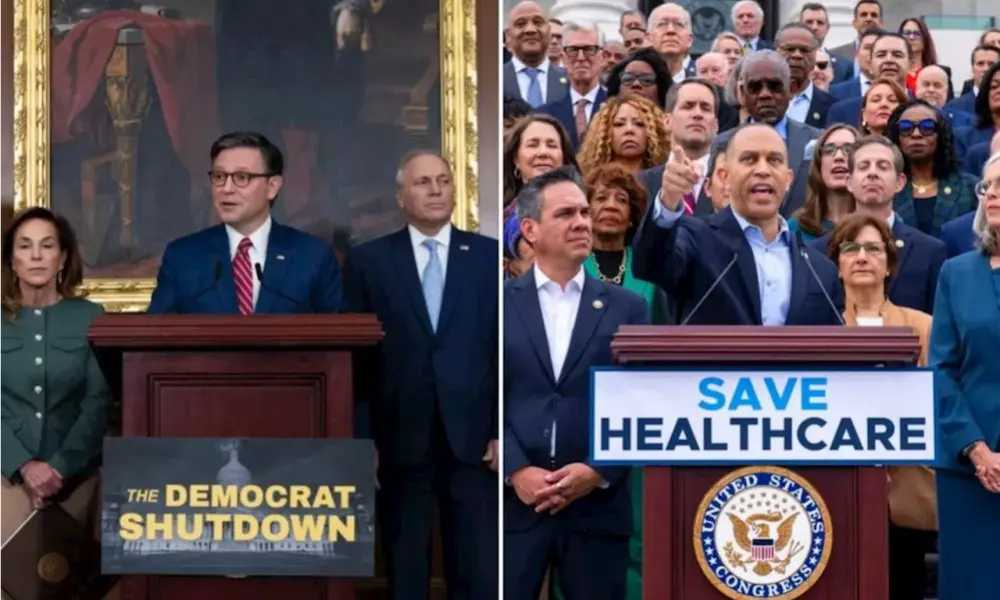
Public discourse has intensified regarding perceived media bias and political commentary, particularly in relation to statements made by prominent figures. A recent post by Cabot Philips highlighted the contrasting tones used by CNN in reporting on economic indicators under the Biden administration. While the network noted that “US inflation is still high, but it’s falling,” citing a Consumer Price Index of 6%, it previously described inflation during the Trump administration as “US inflation remained at 2.7% in December, underscoring persistent cost-of-living challenges.”
The divergence in tone has raised eyebrows among political commentators. This discussion comes in the wake of former President Donald Trump securing notable achievements during his visit to Davos, including continued funding for Greenland and enhanced military positioning in the Arctic. In contrast, Canadian Prime Minister Mark Carney recently signed a deal with China, which some critics argue undermines national sovereignty and security in light of NATO’s stance against Beijing.
Social media platforms have become a battleground for opinions, with various users voicing their frustrations over political actions and societal issues. One user expressed confusion over the proposal of an “origination purchase tax” on online shopping, questioning the necessity of additional taxes when state sales tax is already applied. The debate over taxation reflects broader concerns about government spending and fiscal responsibility.
Amid these discussions, allegations of political impropriety have emerged. Critics of the recent protests in Minneapolis have suggested that the rioters are not ordinary citizens, but rather “paid agitators.” This sentiment underscores a growing divide in public perception regarding law enforcement and protest movements.
Moreover, discussions of political leadership have prompted calls for accountability. One commenter challenged the effectiveness of past administrations, urging critics to provide concrete examples of failures rather than resorting to emotional arguments.
Social media interactions also highlight generational divides in political perspectives. The conversation has shifted toward identity politics, with particular attention paid to U.S. Representative Delia Ramirez, who stated, “I am a proud Guatemalan before I am an American.” This remark has sparked a debate about the implications of prioritizing identity over national unity.
The ongoing discourse reflects a broader struggle within society to navigate complex political landscapes. As citizens engage with these issues, it is crucial to foster a culture of informed dialogue that emphasizes facts over opinions.
Amid these exchanges, the media plays a pivotal role in shaping public perception. The call for transparency and accurate reporting remains paramount as citizens seek to understand the intricacies of governance and policy-making.
This commentary forum, known as Sound Off, provides a platform for readers to express their views on current events. Submissions are limited to 75 words and are subject to editorial review for clarity and grammar. Interested individuals can submit their opinions to [email protected], with “Sound Off” in the subject line.