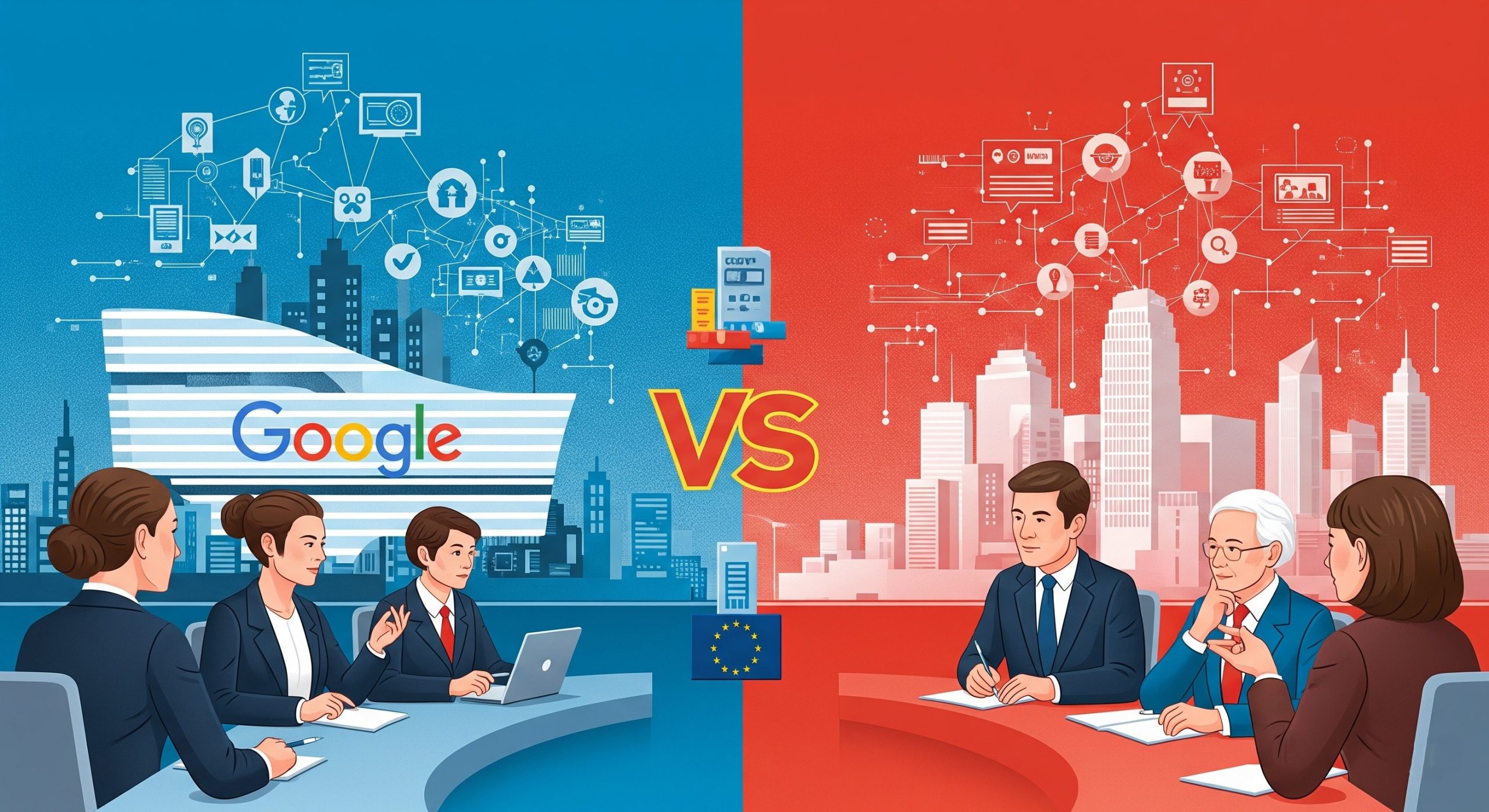
The European Union (EU) has intensified its scrutiny of Google by implementing new rules under the Digital Markets Act (DMA). These regulations aim to compel Google to share its data and services with smaller AI and search companies. The EU’s primary objective is to prevent Google from leveraging its vast resources to provide its own AI service, notably Gemini AI, with an unfair competitive edge.
The new regulations require Google to ensure equal access for third-party AI services to features that are currently exclusive to its own products. The EU has specifically targeted Google’s Android operating system, demanding that the tech giant facilitate deeper interoperability for other AI developers with Android’s hardware and software capabilities.
New DMA Guidelines on Data Sharing
According to a report from Reuters, the DMA will also mandate that Google shares essential search data with competing search engines and AI service providers. This includes anonymized information regarding rankings, queries, clicks, and viewing patterns. Under the DMA framework, such data must be provided on “fair, reasonable, and non-discriminatory” terms.
Google has expressed substantial concerns regarding these new guidelines. The company argues that the rules could compromise user privacy and security, as well as hinder its innovative capabilities. A spokesperson for Google stated that the firm already provides licensed access to certain data to third-party developers, indicating that they believe they are meeting collaboration obligations.
Implications for Competition and Growth
The EU’s measures could significantly influence the landscape of AI services in Europe. The European Commission is set to assess whether AI chatbot providers can access the newly mandated data, a move that could accelerate the development of alternatives to Google’s search services.
Furthermore, the Commission has established a six-month deadline to finalize these new rules, emphasizing the urgency of implementing fair competition practices in the tech industry. As the situation unfolds, Google’s response and the EU’s regulatory approach will likely shape the future dynamics of AI and search technologies in Europe and beyond.