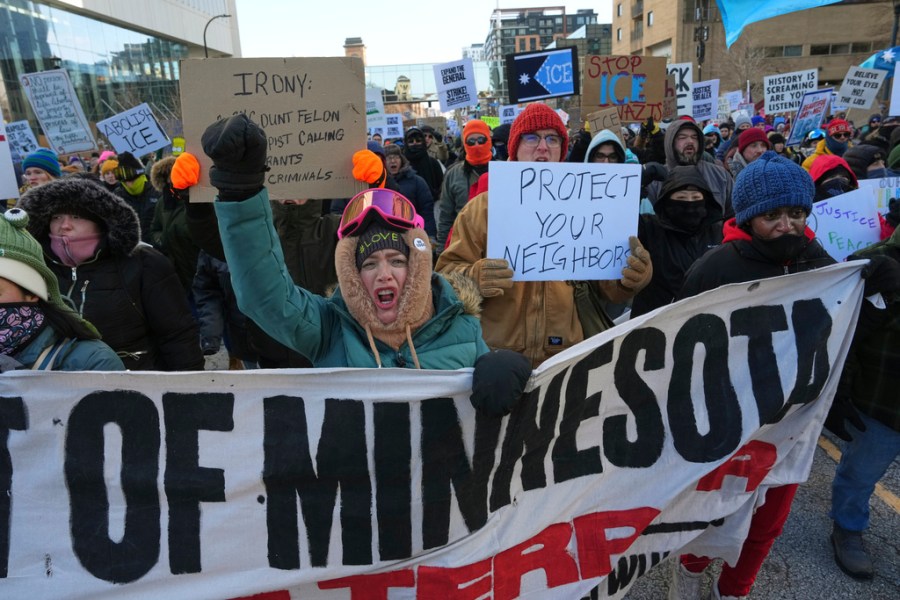
A federal appeals court has declined to impose restrictions on federal agents during protests in Minnesota, following a request from the American Civil Liberties Union (ACLU). The ruling, issued on October 23, 2023, comes in the wake of a fatal shooting that occurred over the weekend, which has heightened concerns regarding law enforcement presence at demonstrations.
The 8th U.S. Circuit Court of Appeals determined that the previous limits placed on federal agents by a lower court were excessively broad and vague. The panel sided with the Trump administration, which argued that such restrictions could lead to confusion and potential legal consequences for agents tasked with maintaining order during protests.
In their decision, the judges noted that “a wrong call could end in contempt,” highlighting the complexities of enforcing unclear directives. This ruling underscores the ongoing tension between civil liberties and law enforcement practices, particularly in the context of heightened public demonstrations.
The ACLU had sought to reinstate the restrictions after the recent events, emphasizing the need to protect the rights of individuals participating in protests. The organization argued that limiting the actions of federal agents was essential to ensure the safety and freedom of demonstrators.
Despite the ACLU’s concerns, the court’s ruling reflects a broader debate surrounding police tactics and civil rights in the United States. As protests continue to shape the social and political landscape, the balance between public safety and individual rights remains a contentious issue.
In Minnesota, local officials and community leaders are now faced with the challenge of navigating this complex legal environment while addressing the needs of their constituents. The recent fatal shooting has intensified calls for accountability and reform within law enforcement, as citizens demand transparency and justice.
The 8th U.S. Circuit Court of Appeals decision has drawn mixed reactions from various stakeholders, illustrating the polarized nature of discussions surrounding police presence at protests. Advocates for civil liberties view the ACLU’s efforts as crucial in safeguarding democratic rights, while supporters of law enforcement emphasize the need for effective policing in volatile situations.
As Minnesota continues to grapple with these issues, the implications of the court’s ruling will likely resonate beyond the state, influencing similar legal battles across the nation. The intersection of law enforcement, civil rights, and public protest remains a critical area of focus as communities strive for balance in a rapidly evolving landscape.