Biofilms, complex communities of microorganisms, are essential to life on Earth, supporting various functions crucial for both human and plant health. Recent research highlights their adaptability and potential role in space environments, though the effects of spaceflight stressors on these structures remain largely unexplored.
Understanding Biofilms and Their Origins
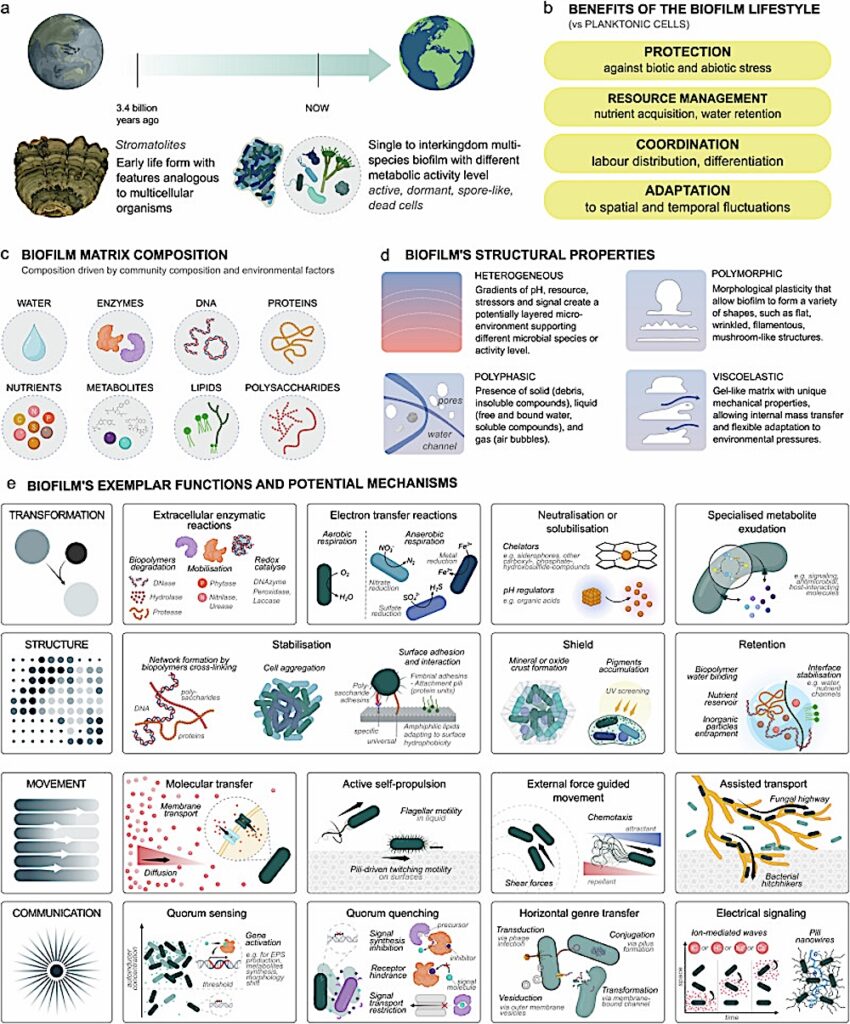
The origins of life on Earth likely involved the transition from simple organic molecule formation to the emergence of microbial life, facilitated by biofilms. These structures may have formed in mineral-rich environments, such as hydrothermal vents and hot springs, which provided both catalytic surfaces and fluctuating energy sources.
Conditions in these environments could have enabled pathways for the production of organic compounds without the need for proto-enzymes. As simple organic molecules aggregated, they formed structured assemblies, creating the foundational building blocks of life, including amino acids and fatty acids.
The evolution of these early biofilms likely provided an advantage in extreme conditions, promoting cooperative interactions among microorganisms. Modern biofilms continue to exhibit this resilience, demonstrating essential functions related to transformation, structure, communication, and movement.
Biofilms’ Role in Space Exploration
As humanity ventures into space, the role of biofilms becomes increasingly significant. They have been considered for various applications, including potential infrastructure and life support systems. Understanding how biofilms adapt to the unique challenges of space environments is vital for future missions.
Current research, as published in NPJ Biofilms Microbiomes, underscores the need to study biofilms further, especially their ability to withstand and thrive under conditions encountered in space. The characteristics of modern biofilms, particularly their extracellular polymeric substances (EPS), are crucial to their functionality.
EPS makes up to 97% of a biofilm’s mass and consists of polysaccharides, proteins, and other organic compounds that contribute to hydration, structural integrity, and chemical defense. The composition of EPS is influenced by microbial community structure and environmental conditions, highlighting the complexity of these biofilms.
Through their unique architecture, biofilms can manage resources efficiently and maintain stability amid fluctuations in their environment. This adaptability not only enhances survival but also supports higher-order behaviors, allowing biofilms to respond effectively to challenges.
As research continues, the implications of biofilms extend beyond Earth. Understanding these microorganisms could provide insights into the origins of life and inform strategies for sustaining human life in off-world habitats. The study of biofilms presents a fascinating intersection of astrobiology, microbiology, and evolutionary science, paving the way for future discoveries in both terrestrial and extraterrestrial contexts.
In conclusion, biofilms are not merely remnants of life’s early stages; they are integral to our understanding of life itself, serving as both a historical record and a potential resource for future exploration.