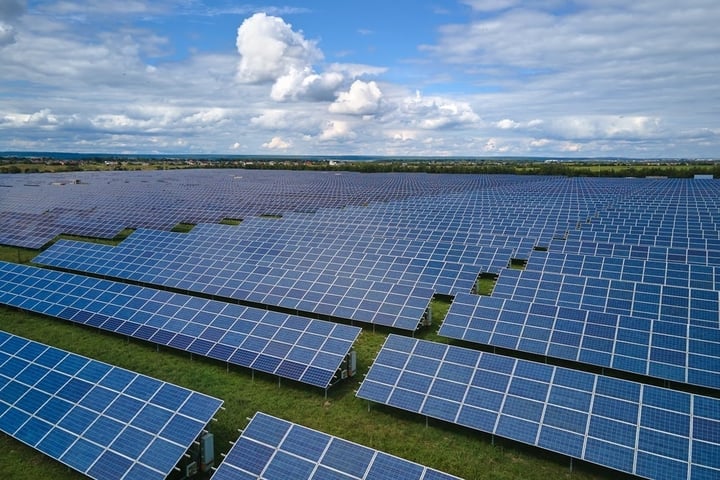
In 2025, solar power emerged as the dominant force behind the growth in U.S. electricity demand, according to a new analysis from the global energy think tank Ember. The report highlights a significant increase in electricity demand of 135 terawatt-hours (TWh), marking a 3.1% rise and the fourth-largest increase in the past decade. During this period, solar generation expanded by 83 TWh, a remarkable 27% increase compared to 2024, fulfilling 61% of the nation’s new electricity needs.
Dave Jones, chief analyst at Ember, emphasized the vital role of solar energy in addressing the surging demand. “Solar growth was essential in helping to meet fast-rising U.S. electricity demand in 2025,” he stated. The data illustrates how solar power generated electricity not only where it was needed but also, thanks to advancements in battery technology, during peak usage times.
Regional Contributions to Solar Growth
The Southern United States played a pivotal role in the expansion of solar energy, with Texas leading the charge. The state accounted for the largest increase in solar output, reflecting both a rise in demand and the rapid deployment of utility-scale projects. In fact, solar energy met 81% of the electricity demand growth in Texas and the Midwest, while fulfilling about one-third of demand growth in the Mid-Atlantic region.
Several large solar facilities were commissioned in 2025, including the 153-megawatt Felina Project in El Paso, Texas, the 150-MW Ratts 1 Solar Project in Indiana, and the 145-MW Axial Basin Solar Project in Colorado. These projects benefited from high solar irradiance, swift permitting processes, and the availability of land, making them attractive investments.
Timing also played a crucial role, as the increase in solar generation effectively met the rise in U.S. electricity demand during daytime hours, specifically between 10 a.m. and 6 p.m. Eastern. The rapid development of battery storage technology enabled solar energy to cover some evening demand, transferring power generated during peak sunlight hours to later in the day.
Challenges from Rising Silver Prices
Despite the significant progress in solar energy, a surge in silver prices poses a potential risk to its expansion. Silver prices recently reached a record high of $99.36, creating cost pressures for solar manufacturers. According to Yali Jiang, an analyst at BloombergNEF, “Spiking commodity prices are creating irresistible cost pressures for solar manufacturers.” He noted that the rising costs of silver are likely to increase module prices, which have already faced challenges in recent years.
The cost of silver used in solar cells has risen significantly, now accounting for more than 29% of a panel’s total cost, compared to 3.4% in 2023 and 14% in 2025. Manufacturers are striving to reduce silver usage, decreasing the average from around 11 milligrams per watt in 2024 to approximately 9 milligrams per watt in 2025. However, aggressive substitution efforts carry inherent risks.
Gregor Gregersen, founder of Silver Bullion Group, cautioned that if a solar panel fails after ten years but is covered by a twenty-year warranty, manufacturers could face significant liabilities. This explains why advancements in reducing silver usage have been gradual rather than swift.
Looking ahead, the U.S. Energy Information Administration predicts that electricity generation will continue to rise over the next two years, with solar remaining the fastest-growing energy source. Utility-scale solar generation is expected to increase from approximately 290 billion kilowatt-hours in 2025 to 424 billion kilowatt-hours by 2027, supported by nearly 70 gigawatts of new capacity slated for deployment.
Texas is projected to lead this growth, with solar generation in the ERCOT market nearly doubling within this timeframe. As the industry navigates both opportunities and challenges, the interplay of solar power and commodity prices will be crucial in shaping the future of renewable energy in the United States.