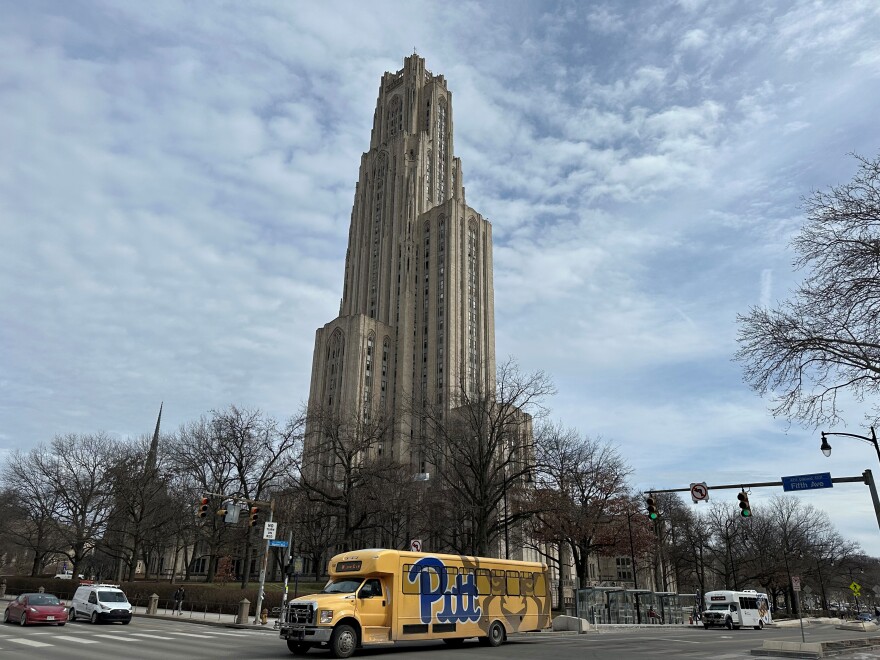
The University of Pittsburgh has secured a significant gift of $53.5 million from the Orland Bethel Family Foundation to enhance its orthopedics research capabilities. This funding is part of a broader commitment of nearly $100 million aimed at establishing and expanding the Orland Bethel Family Musculoskeletal Research Center (BMRC), which began operations in 2024 following an earlier donation from the foundation.
This latest contribution, announced on a Wednesday, will facilitate the center’s expansion and enable researchers to commercialize their innovations, developing new products and treatments for various musculoskeletal conditions. According to Anantha Shekhar, senior vice chancellor for health sciences at Pitt, this multifaceted gift will position the BMRC as a leader in both research and training while serving as a powerful economic driver for the region.
The new funding will support the creation of three endowed professor positions, establish an award program for mid-career researchers, and enhance the recruitment and retention of BMRC staff and leadership. The BMRC focuses on a wide array of musculoskeletal disorders, including osteoporosis, degenerative arthritis, tendon injuries, and spinal disorders.
Pitt has received multiple significant gifts from the Orland Bethel Family Foundation, including $25 million in 2023 to initiate the research center and $18.5 million the previous year to launch its biobank. The most recent donation will further bolster the biobank, which has already collected 12,000 specimens from 350 patients, enabling researchers to advance personalized medicine.
Bethel, the founder of Hillandale Farms, a leading U.S. egg producer, has a personal connection to the center, having undergone spinal surgery at UPMC. He credited Dr. Joon Lee, an orthopedic surgeon, with transforming his life during his treatment for spinal stenosis, a condition causing nerve and spinal cord compression.
“Dr. Lee and the others took over my care nearly a decade ago, transforming my life and giving me new hope,” Bethel remarked. He expressed confidence that the support from his family’s foundation will similarly impact others.
This latest gift places the Orland Bethel Family Foundation among the largest donors in the university’s history. Dr. Lee noted the potential for Bethel’s philanthropy to mirror the historical contributions of other notable Pittsburgh families, such as the Mellons or Hillmans.
The BMRC’s biobank plays a crucial role in advancing research by providing vital specimens that improve understanding of diseases. Dr. Lee indicated that the new funding will enhance the center’s capacity to develop a comprehensive database connecting Pitt’s various biobanks, which will facilitate broader research collaboration. Plans are also underway to create an online searchable database of tissue samples to benefit external researchers.
Looking ahead, the BMRC aims to enter a new phase focused on translating its research into commercial applications. “To translate research and data into something meaningful for the public, engagement with pharmaceutical companies or commercial entities is essential,” Dr. Lee explained. He acknowledged that creating pathways to marketable products or treatments presents challenges.
The Bethel gift will establish a risk capital fund to invest in early-stage innovations with high potential, streamlining the journey from research to market. Additionally, seven of the eleven BMRC labs will relocate to a new 25,000-square-foot facility in Pitt’s biomedical science tower, which will also feature a new surgical training suite for UPMC’s orthopedic surgery residents.
Dr. Lee emphasized the transformative potential of the research conducted at the BMRC, which could lead to personalized care strategies for a range of diseases. “I am so enthused about what these people are doing and what they’re going to accomplish,” Bethel stated. “They’re going to have people living longer and enjoying their lives, and that would be the greatest thing to have ever been a part of.”