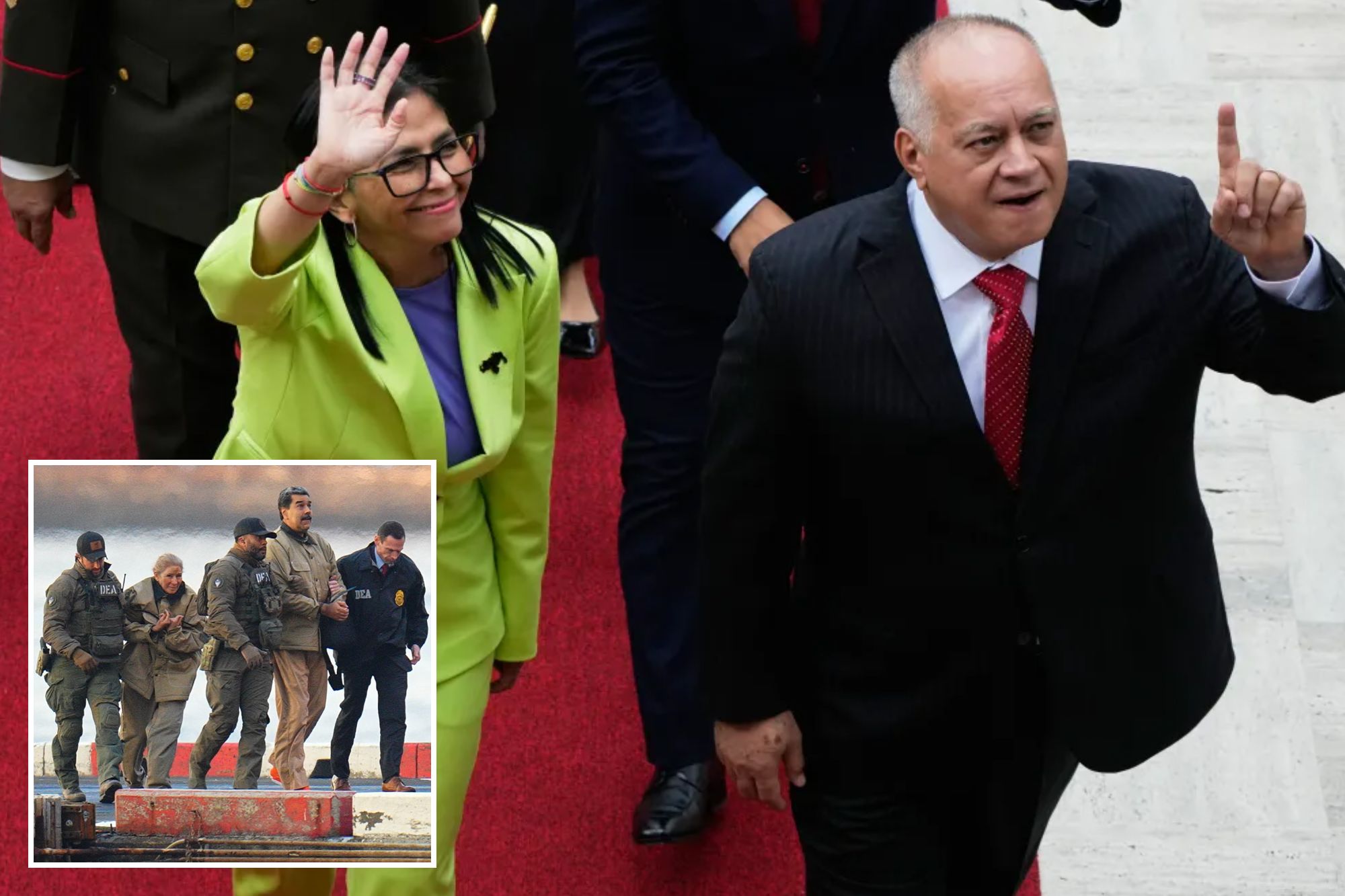
Discussions between officials in the Trump administration and Venezuela’s interior minister, Diosdado Cabello, took place months before the January 3, 2023, US operation to detain President Nicolás Maduro. These conversations, which have continued since the operation, highlight the delicate dynamics within Venezuela’s political landscape.
According to multiple sources familiar with the negotiations, US officials cautioned Cabello against utilizing the security services and militant supporters he oversees to target opposition groups. The security apparatus, which includes intelligence services, police, and military forces, remains largely intact following the US raid. Although Cabello is named in the same US drug-trafficking indictment as Maduro, he was not apprehended during the operation.
The communication with Cabello reportedly began in the early days of the Trump administration and persisted leading up to the US effort to remove Maduro. Following Maduro’s ouster, discussions have continued, underscoring the US’s strategic interests in Venezuela. According to a source briefed on US concerns, if Cabello decides to mobilize his forces, it could lead to chaos that the Trump administration aims to avoid, potentially jeopardizing the authority of interim President Delcy Rodriguez.
It remains uncertain whether the discussions encompassed future governance of Venezuela. Cabello has publicly expressed solidarity with Rodriguez, who has received praise from Trump. While Rodriguez is viewed as a key figure in the Trump administration’s strategy for Venezuela post-Maduro, Cabello’s influence poses significant risks. A source familiar with the situation indicated that Cabello has maintained communication with US officials through direct conversations and intermediaries.
Both the White House and the Venezuelan government did not respond to requests for comments regarding these discussions. Cabello, a long-time loyalist of Maduro and a close associate of the late former President Hugo Chavez, has been a prominent figure in the Venezuelan government and is perceived as one of the most powerful individuals in the country. He has a history of repression and is associated with pro-government militias known as the colectivos, which have been deployed to suppress dissent.
US officials have expressed concern that Cabello’s actions could undermine stability during a potential transition period in Venezuela. Rodriguez is reportedly working to consolidate her power by placing allies in key positions, balancing internal threats while complying with US demands to increase oil production. Elliott Abrams, who served as the Trump administration’s special representative on Venezuela, indicated that many Venezuelans expect Cabello to be removed for any democratic transition to progress.
Cabello has long faced US sanctions due to allegations of drug trafficking. In 2020, the US placed a bounty of $10 million on him, later increasing it to $25 million. He has consistently denied any connections to drug trafficking. After Maduro’s removal, some in Washington questioned why Cabello was not apprehended, noting that he is listed second in the Justice Department’s indictment against Maduro.
In response to US intervention, Cabello denounced American involvement in Venezuela, stating, “Venezuela will not surrender.” Reports of security forces searching residents at checkpoints have diminished recently, and both Trump and the Venezuelan government have mentioned the release of political prisoners, a process overseen by Cabello. Rights groups, however, report that the pace of these releases has been slow, with hundreds still unjustly detained.
As the situation in Venezuela continues to evolve, the complexities of US-Venezuelan relations and the dynamics between key figures like Cabello and Rodriguez will remain crucial in shaping the country’s future.