China’s Chang’e-6 mission made significant strides in lunar exploration when it successfully returned to Earth with 1,935.3 grams (approximately 4.25 pounds) of lunar regolith and rock in June 2024. This historic achievement marks the first sample-return mission from the Moon, providing crucial data about its composition and geological history. The analysis of these samples is vital as various space agencies, including China’s National Space Administration, NASA, and the European Space Agency (ESA), plan to establish lunar bases on the far side of the Moon.
One of the primary focuses of future lunar missions is the South Pole-Aitken Basin, a region known for its permanently shadowed areas that potentially harbor vast quantities of water ice. Understanding the Moon’s geological evolution is essential for these plans, especially as scientists seek to answer unresolved questions regarding the impact events that shaped its surface and subsurface.
Uncovering Geological Secrets
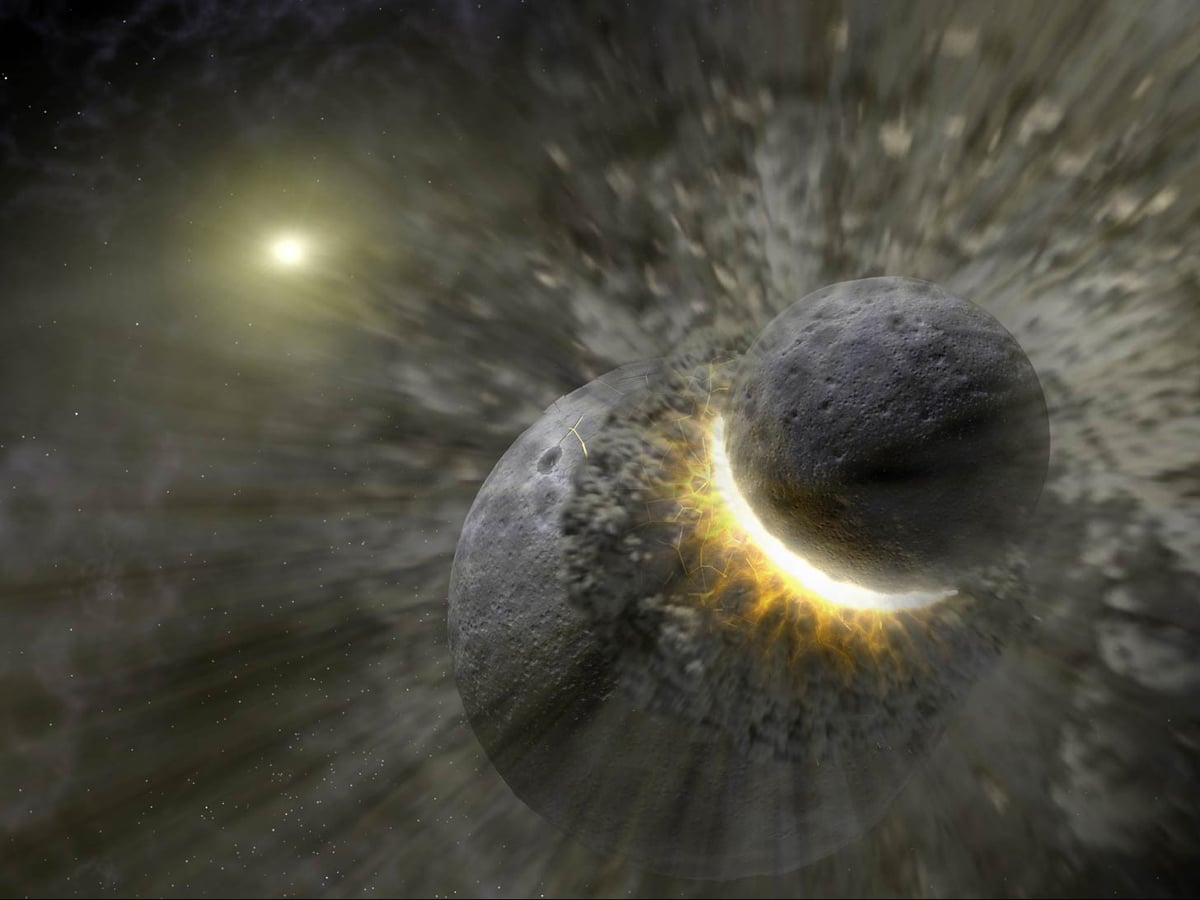
Researchers from the Institute of Geology and Geophysics (IGG) at the Chinese Academy of Sciences (CAS) conducted an in-depth analysis of basalt samples from the Chang’e-6 lander. Their findings indicate that the colossal impact event responsible for creating the South Pole-Aitken Basin approximately 4.25 billion years ago not only reshaped the Moon’s surface but also caused significant heating in its deep interior. This heating led to the loss of certain volatile elements, providing insight into the Moon’s geological changes over time.
Using high-precision isotope analysis, the team identified subtle variations in isotope ratios, capturing the effects of the impact on the Moon’s materials. Understanding these impacts is crucial, as they are considered the main external forces that have shaped the lunar landscape, contrasting with Earth, where tectonic activity plays a dominant role in geological changes.
The high temperatures generated by the impact had a direct influence on moderately volatile elements, such as potassium, zinc, and gallium. These elements are particularly susceptible to volatilization and isotopic fractionation under extreme conditions. The researchers have termed these variations as “isotopic fingerprints,” which serve as vital indicators of the temperature and pressure conditions induced by impacts, shedding light on the transformations of the lunar crust and mantle.
Comparative Analysis with Apollo Samples
An intriguing aspect of the study was the notable differences between the Chang’e-6 samples and those collected by the Apollo astronauts from the Moon’s near side. The basalts obtained from the far side of the Moon contain a significantly higher proportion of the heavier potassium-41 isotope. To explain this finding, the research team explored several possibilities, including cosmic ray exposure, volcanic activity, and the deposition of impactor materials.
Ultimately, they concluded that an early large-scale impact was responsible for altering the potassium isotope composition in the Moon’s deep mantle. This event likely created conditions that caused the loss of the lighter potassium-39 isotope while enriching the heavier potassium-41 isotope. Additionally, the depletion of volatile elements might have suppressed volcanic activity on the far side of the Moon.
These discoveries contribute to a growing body of research that reshapes our understanding of how major impacts influenced the geological evolution of the Moon. The findings underscore significant differences in the development of the near and far sides over billions of years and highlight the critical contributions of Chinese missions and scientists to the ongoing exploration of lunar and terrestrial evolution.
As international interest in lunar exploration continues to grow, the insights gained from Chang’e-6 will play a key role in informing future missions and enhancing our understanding of the Moon’s history and its potential as a site for human habitation.