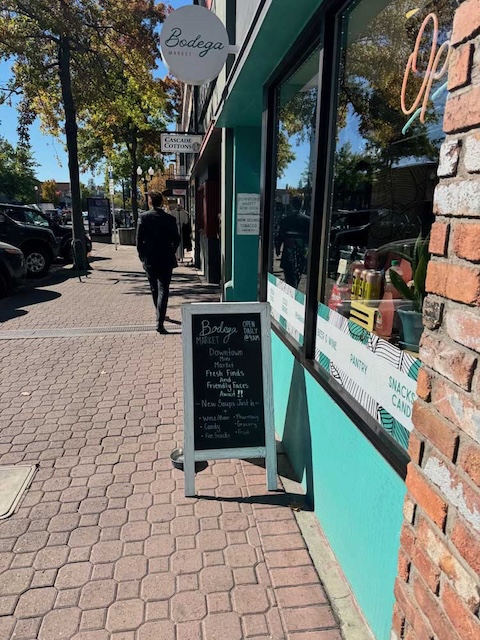
A business group focused on revitalizing the Bend Central District has proposed new fees for local businesses to fund development projects aimed at boosting the area’s economy. The Bend Central District Business Association received approval from the Bend City Council to advance this initiative, with the goal of implementing the fees by July 1, 2026.
The proposal involves establishing an Economic Improvement District (EID) that would encompass a region from the Bend Parkway to Fourth Street, extending from Revere Street in the north to the 3rd Street underpass in the south. This area, identified as a future urban hub, has previously been targeted for redevelopment efforts by both the city and private developers.
During a recent city council meeting, Cyrus Mooney, a business advocate for the city, characterized the EID as “some sort of self-imposed tax that provides additive services to a neighborhood that is outside of what a city would normally provide.” The proposed fees are intended to complement new public projects and incentives tied to property taxes within an urban renewal district.
Proposed Fee Structure and Project Goals
The business fees would begin at 10 cents per square foot of commercial space, generating approximately $179,435 annually. Individual costs for businesses would vary; for instance, a small plant store could expect to pay around $400 per year, while a larger establishment like a hotel might incur fees of up to $4,000. The plan includes annual rate increases of 1 cent to ensure sustainable funding.
The Bend Central District Business Association envisions that the collected funds would support a variety of initiatives, including beautification projects like murals and lighting, marketing for local businesses, and security measures such as graffiti removal and patrols. Additionally, the fees would help cover the salary of an executive director to oversee these projects and liaise with the city.
Kurt Alexander, president of the association and a local property owner, emphasized the importance of maintaining momentum in the central district. “We would like to strike while the iron is hot now,” he stated, referencing his recent investments in the area, including the establishment of a food cart pod and cocktail bar.
The city council members expressed support for the initiative. Megan Perkins described it as “an awesome innovative, well-thought plan,” while Ariel Méndez called it “a really big milestone.” Nonetheless, Mike Riley raised concerns about whether the proposed tax rate would provide sufficient funds to achieve the desired economic changes, urging the association to ensure it could surpass initial expectations.
Concerns from Local Businesses
Despite some backing, skepticism exists among various business owners and property managers regarding the new fees. Willie Hertford, president of Miller Lumber, questioned the value of the proposed fees for his long-established business, arguing that he already handles his own marketing and that city improvements are underway through existing property tax reinvestments.
“Given the choice of having an additional expense or not, I would be one not to,” Hertford remarked, implying that without clear plans for fund usage, many may oppose the fees. Others in the community share similar sentiments, fearing that the new financial burdens could drive businesses to seek lower costs in nearby cities.
Commercial broker Brian Fratzke expressed concern that increasing fees would dissuade businesses from remaining in Bend, especially as they are already facing rising utility costs and development charges. Another local manager indicated that the costs could ultimately be passed down to tenants through rent hikes, compounding financial pressures on small businesses.
Despite these concerns, some local leaders advocate for the potential benefits of the proposed investment. Sara Odendahl, CEO of the Bend Chamber of Commerce, suggested that targeted investments in beautification and marketing could strengthen the area and support long-term economic resilience, particularly in challenging times.
The Bend City Council is expected to deliberate further on these proposals, which will require at least one-third of property owners to support them during the upcoming public hearings. As discussions continue, the future of the Bend Central District hangs in the balance, with both opportunities and challenges ahead for local businesses.