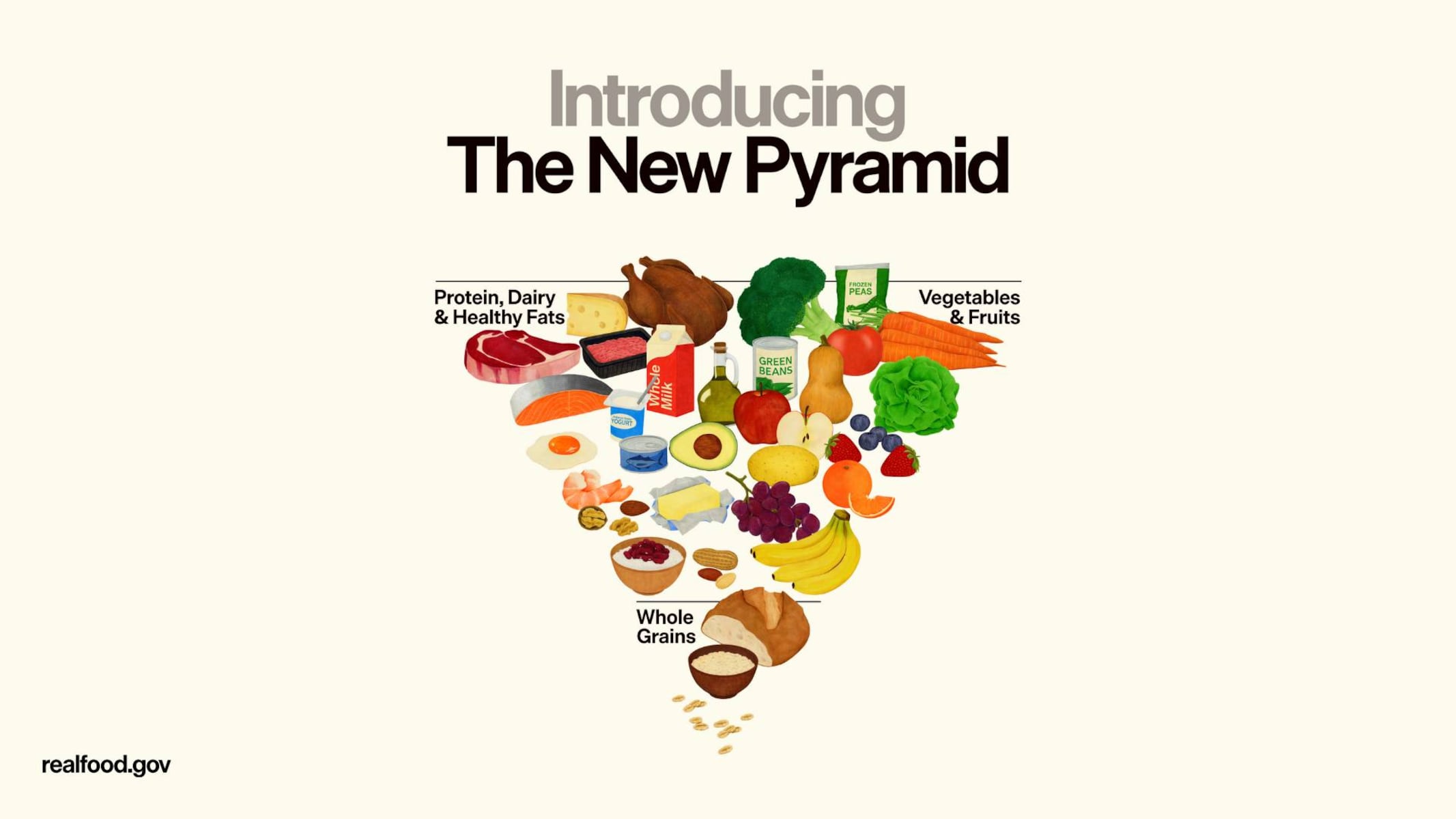
The federal government has unveiled its updated dietary guidelines for the years 2025 to 2030, emphasizing a significant shift towards nutrient-dense foods. Released on January 7, 2026, these guidelines aim to reshape the nation’s food culture and combat chronic health issues, such as diabetes, which affects nearly half of the American population. This new framework represents a move away from highly processed foods, focusing instead on “real food” options that promote better health outcomes.
Key Changes in Dietary Recommendations
The Dietary Guidelines for Americans highlight the importance of consuming whole or minimally processed foods. These foods are defined as lacking added sugars, industrial oils, and artificial additives. Officials from the Department of Health and Human Services (DHHS) and the Department of Agriculture (USDA) emphasize that this approach seeks to address alarming public health statistics. Health and Human Services Secretary Robert Kennedy Jr. stated that the guidelines aim to “make America healthy again” by tackling the root causes of chronic conditions.
To facilitate actionable changes, the guidelines provide specific daily consumption targets. Individuals are encouraged to consume between 1.2 to 1.6 grams of protein per kilogram of body weight daily, along with three servings of vegetables, two servings of fruits, and three servings of dairy. The recommendation for whole grains has been adjusted to two to four servings, while saturated fat should be limited to 10% of total daily calories. Sodium intake is advised to remain below 2,300 milligrams for most people, a goal that can be achieved by reducing processed foods.
The New Food Pyramid
A notable change in the guidelines is the inversion of the traditional food pyramid. In this new model, protein, dairy, healthy fats, vegetables, and fruits are prioritized at the top, encouraging the inclusion of nutrient-dense foods such as eggs, seafood, meats, full-fat dairy, nuts, and avocados. Whole grains have been repositioned at the bottom, with a focus on high-fiber options like whole-wheat bread and brown rice. In contrast, refined carbohydrates, including white bread and many processed breakfast items, are now discouraged.
The guidelines also stress the need to limit added sugars, establishing a clear cap of no more than 10 grams per meal. Consumers are advised to check ingredient labels for hidden sugars, which may appear under various names including high-fructose corn syrup, dextrose, and maltose. Instead of relying on sugar and unhealthy sweeteners for flavor, the guidelines recommend using salt, spices, and herbs.
Beyond what to eat, the guidelines provide insight into cooking methods and beverage choices. Rather than setting a universal daily calorie goal, they promote portion control based on individual factors such as age, sex, and activity level. Recommended cooking methods include baking, broiling, roasting, and stir-frying, while deep-frying is discouraged. For beverages, water and unsweetened drinks are identified as ideal choices, while sugar-sweetened beverages should be avoided, and juice consumption should be limited or diluted.
For more comprehensive information on these dietary guidelines, consumers are encouraged to visit realfood.gov. The updated framework aims to empower individuals to make informed dietary choices that contribute to long-term health and well-being.