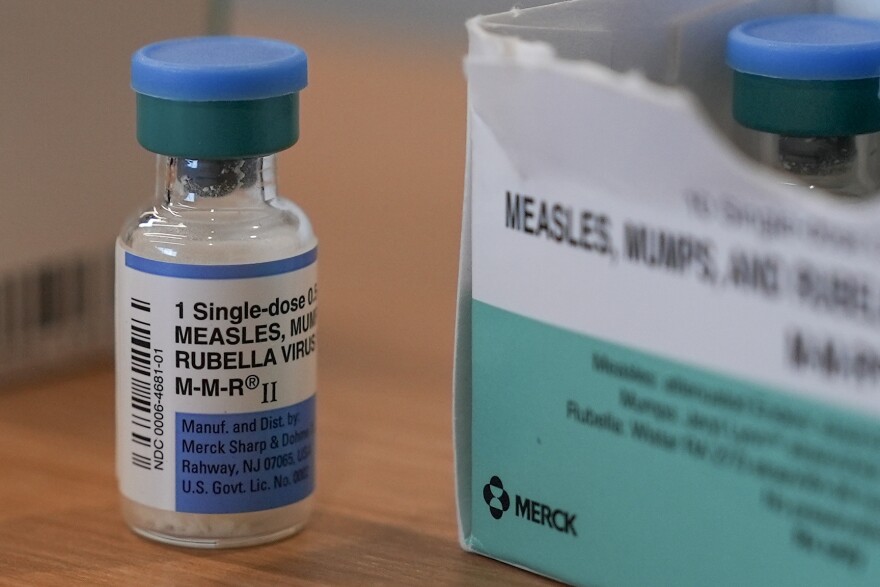
Vaccination rates among kindergarten students in Allegheny County, Pennsylvania, have fallen below the herd immunity threshold for the 2023-2024 school year, raising concerns among public health officials. Data from The Washington Post indicates that one in three kindergarteners attended schools where vaccination rates for the measles, mumps, and rubella (MMR) vaccine were insufficient to prevent outbreaks. Public health experts emphasize that herd immunity for MMR requires at least a 95% vaccination rate to effectively protect against these highly contagious diseases.
Dr. Amesh Adalja, an infectious disease physician affiliated with the Johns Hopkins Center for Health Security, highlighted the critical need for high vaccination rates. “For a disease like measles, you want to have protection levels around 95% because it is so contagious,” he stated. “When there are gaps in that coverage, it leads to more susceptible individuals in the community.”
According to the report, over half of Pennsylvania counties, including Allegheny, have reported MMR vaccination rates below the herd immunity threshold. While traditional public schools in the county largely achieved this threshold, many private institutions fell short. Notably, four out of five Allegheny County schools with MMR rates of 75% or lower were affiliated with religious organizations.
The Pennsylvania Department of Health allows for religious, philosophical, or medical exemptions from vaccinations, which must be documented in writing. At Harvest Baptist Academy in Natrona Heights, a significant portion of students—over a third—received exemptions, primarily for religious reasons. In contrast, Catalyst Academy Charter School in Pittsburgh noted that only 12.5% of kindergartners claimed personal exemptions, citing administrative reasons for their vaccination reporting.
Increasingly, health experts express alarm about the potential public health ramifications of declining vaccination rates. Dr. Raymond Pontzer, a professor at the University of Pittsburgh, warned, “We’re already seeing the reemergence of these diseases. It’s a shame because kids are going to die. They’re going to suffer and be hospitalized.”
In 2025, Pennsylvania reported 16 cases of measles, including in cities such as Erie and Philadelphia, while the United States faced its highest number of measles cases since the disease was declared eliminated in 2000. The National Foundation for Infectious Diseases reported that 93% of cases involved individuals who were unvaccinated or whose vaccination status was unclear.
Despite the known risks associated with measles, public awareness appears to have diminished. Dr. Kirsten Lin, a family medicine specialist, noted, “We’ve become a little bit complacent because we don’t see it.” This complacency coincides with a broader national trend, where only 10 states maintained MMR vaccination rates at or above the herd immunity threshold for the 2024-2025 school year.
The rise in vaccination exemptions in Pennsylvania raises concerns among health officials, with some advocating for stricter policies. Dr. Adalja criticized the state’s exemption policy, stating, “There has been leniency because people are trying to avoid controversy, especially with the anti-vaccine movement.” Unlike some states that have eliminated non-medical exemptions, Pennsylvania has retained its policies, which could hinder efforts to bolster vaccination rates.
Experts attribute the decline in vaccination rates to various factors, including mixed messaging around vaccines and the influence of social media. Dr. Pontzer remarked that misinformation during the COVID-19 pandemic has significantly impacted public perception of vaccines. “If we had social media when Jonas Salk invented the polio vaccine, we would still be dealing with polio in this country,” he cautioned.
Dr. Lin echoed these sentiments, noting the proliferation of social media influencers who pose as experts, contributing to confusion and hesitancy. Families’ reluctance to visit healthcare providers during the pandemic further delayed routine vaccinations, although most children have since caught up on their immunizations.
The discrepancy in vaccination recommendations from federal and state health agencies also creates confusion. Following a recent recommendation by the Centers for Disease Control and Prevention (CDC) to revise childhood immunization guidelines, state officials reaffirmed that no changes would be implemented in Pennsylvania. “Health care providers have always used shared decision-making and informed consent with parents,” stated Dr. Debra Bogen, Pennsylvania’s Health Secretary.
Despite the reaffirmation from state agencies, Dr. Adalja warned that conflicting guidance could foster uncertainty among parents about vaccination. He emphasized the need for clarity in communication to combat misinformation effectively.
As vaccination rates decline, the potential for outbreaks increases, posing a significant threat to public health. Dr. Lin believes that primary care physicians play a vital role in addressing vaccine hesitancy. “I would never try to force someone to receive a vaccine,” she stated. “The more time that physicians and providers can spend talking to their patients about vaccines, the better we can counteract misinformation.”
With public health at stake, experts urge families to engage in informed discussions with healthcare providers to ensure the well-being of children and communities alike. As vaccination rates continue to decline, the importance of proactive health measures grows ever more critical.