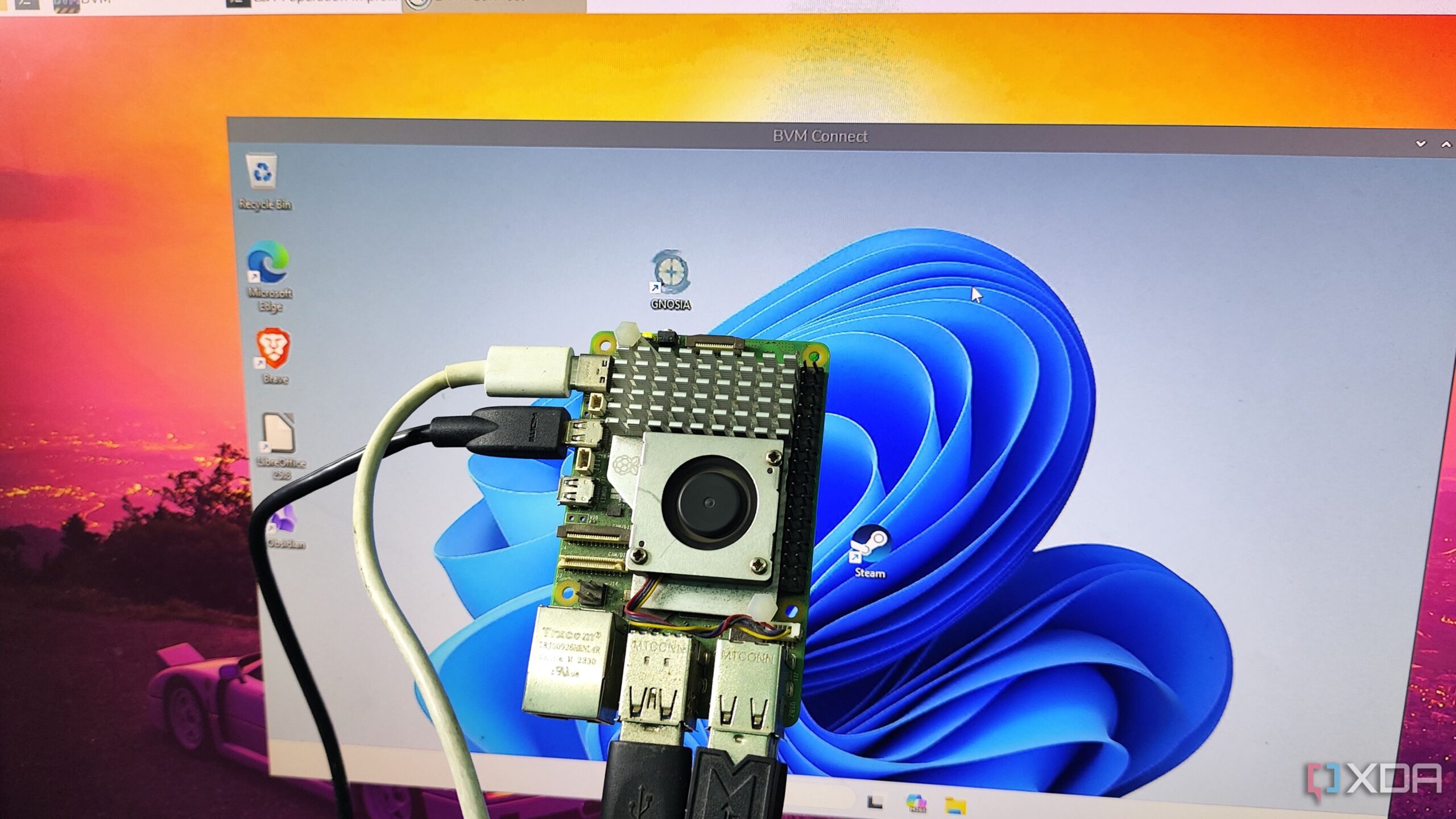
UPDATE: In a surprising new development, users can now run virtual machines (VMs) on the Raspberry Pi, challenging previous assumptions about its capabilities. This breakthrough is igniting excitement among tech enthusiasts and DIYers alike, with reports confirming successful installations of Ubuntu Server and other virtualization platforms.
This revelation is particularly important for those seeking efficient computing solutions on a budget. The Raspberry Pi, often viewed as a simple hobbyist device, can now tackle more demanding tasks, including running Windows 11 as a VM. This capability opens new doors for developers and tinkerers, allowing them to explore advanced functionalities without the need for costly hardware.
Users have reported success deploying Canonical’s MicroCloud on Raspberry Pi boards, particularly the 8GB model. While initial attempts using Proxmox faced compatibility hurdles, the shift to Ubuntu Server proved more fruitful. The efficient nature of LXD allows users to run multiple VMs seamlessly, with some reporting the ability to operate two VMs alongside containers without performance degradation.
Key Findings: The Raspberry Pi 5 can reportedly handle up to four VMs simultaneously under optimal conditions. This is a game-changer for those who previously thought such setups were impossible on this platform.
Moreover, the introduction of the Botspot VM has made running Windows 11 on Raspberry Pi a reality. Easy to configure and available on Pi-Apps, it allows users to experience Microsoft’s flagship OS on their devices. However, performance does dip when using a 4K display, with a 1080p resolution recommended for smoother operation.
While the performance of VMs is commendable, tech experts suggest that containers remain a more efficient option for most applications. Technologies like Docker and Kubernetes work exceptionally well with Raspberry Pi, enabling users to experiment with mixed clusters of Raspberry Pi nodes and other ARM devices.
As users dive deeper into these new capabilities, the Raspberry Pi is transforming from a simple educational tool into a versatile computing platform, urging hobbyists to rethink its potential. The excitement surrounding these developments is palpable, as tech communities share experiences and tips on deploying VMs effectively.
Next Steps: Tech enthusiasts are encouraged to explore these new virtualization options while keeping performance considerations in mind. With the Raspberry Pi becoming a viable platform for running multiple operating systems, the future looks bright for innovative DIY projects.
Stay tuned for more updates as this story develops, and join the conversation as users share their experiences running VMs on Raspberry Pi.