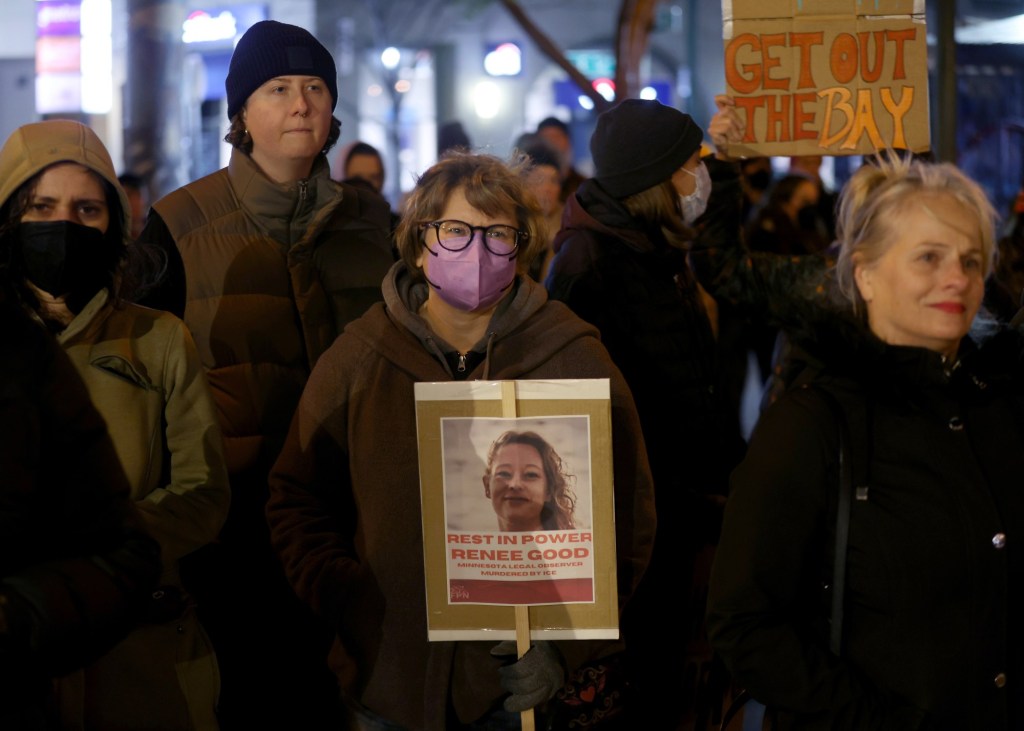
UPDATE: The shocking killing of Renee Nicole Good by an Immigration and Customs Enforcement (ICE) agent in Minneapolis has ignited immediate fears across the Bay Area. Advocates and legal observers are grappling with the chilling implications this incident carries for immigrant communities, raising urgent calls for heightened awareness and action.
Good was shot on October 30, sparking outrage and fears among members of the Santa Clara County Rapid Response Network. This coalition of nonprofit organizations operates a hotline to report ICE activity and connect residents with legal support. They emphasize the real risks inherent in monitoring federal immigration enforcement.
Yesenia Campos, a volunteer with the network, experienced this firsthand when she was detained by ICE just months into her role. “We know that we may potentially confront ICE. Now we know that they are unpredictable,” Campos stated at a press conference. This incident underscores the urgent need for safety among those documenting immigration enforcement.
EmilyRose Johns, president of the National Lawyers Guild San Francisco Bay Area chapter, noted that legal observers play a crucial role in documenting law enforcement actions. “You are documenting, as dispassionately as possible, what is occurring,” Johns explained. The constitutional right to observe police behavior is under threat, especially in light of recent events.
The circumstances surrounding Good’s death have drawn significant scrutiny. Secretary of Homeland Security Kristi Noem labeled Good a “domestic terrorist,” alleging she attempted to run over an ICE agent. However, eyewitness videos contradict this narrative, showing the agent firing at Good’s vehicle as it moved slowly away, leaving many questioning the official account.
As advocates in the Bay Area reflect on the implications of Good’s death, they express deep concerns about retaliation against those who monitor federal agents. Stephanie Jayne, another member of the Rapid Response Network, revealed that ICE agents have targeted her with intimidation tactics, including pulling her over and documenting her movements. “This intimidation is intentional,” Jayne emphasized, urging her peers to remain vigilant despite the risks.
The chilling reality is that observers face potential harm simply for documenting ICE actions. Jayne insists, “You do not need to be fearless to be a responder. You need to be committed to the belief that what is happening is wrong.”
The urgency of these developments cannot be overstated. Advocates are rallying for community support and training to ensure the safety of those willing to stand up against federal enforcement actions. As this situation evolves, the consequences of Good’s tragic death continue to resonate, compelling local communities to reconsider their roles in monitoring and supporting immigrant rights.
Authorities and advocacy groups urge immediate action to protect the rights of those affected by ICE enforcement and to ensure that the tragic loss of Renee Nicole Good is not forgotten. The voices of legal observers and community members are more critical than ever in the fight for justice and accountability.
As developments continue to unfold, observers and residents are encouraged to stay informed and prepared, solidifying their commitment to documenting and challenging unjust actions by federal agents.