On January 3, 2024, Earth reached its perihelion, the point in its orbit when it is closest to the sun. At this time, Earth was approximately 91.5 million miles away from the sun, a significant detail that highlights the dynamic nature of our planet’s journey through space.
Understanding the implications of perihelion is essential in grasping how Earth’s distance from the sun influences seasonal changes. While the average distance between Earth and the sun is 93 million miles, this figure fluctuates throughout the year. The planet will reach its aphelion, the farthest point from the sun, in July, when it will be about 94.5 million miles away. This variation affects not only the length of seasons but also their intensity.
Cosmic Relationships and Their Effects
The proximity to the sun also impacts the speed at which Earth travels in its orbit. During the winter months, when Earth is closer to the sun, it moves faster through space. This results in a shorter duration of winter compared to summer. Observers can easily verify this by counting the days from the spring equinox to the fall equinox, compared to the days from fall back to spring.
Despite being closest to the sun during the winter months, this does not transform January into a summer month. However, it contributes to slightly milder winters in the northern hemisphere.
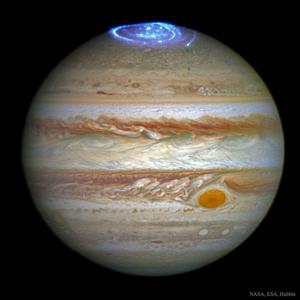
In the night sky, Jupiter currently shines as the brightest planet. Its brightness is attributed to both its massive size—approximately eleven times the diameter of Earth—and its position relative to Earth. Jupiter’s mass, over 300 times that of Earth, generates significant gravitational effects that can subtly influence our planet’s orbit. These gravitational interactions are crucial in understanding long-term climate changes, including the onset of ice ages.
Jupiter will reach opposition on January 10, 2024. At this time, Earth will be directly between Jupiter and the sun, making it an ideal moment for stargazers. The alignment creates an opportunity for Earth to be as close as possible to Jupiter, enhancing its visibility in the night sky.
The Dance of the Planets
Meanwhile, Venus, once known as the “morning star,” is now hidden from view as it currently lies on the opposite side of the sun from Earth. The sun’s glare will keep Venus concealed for a few more weeks, but it is expected to reemerge in the western sky after sunset, earning its title as the “evening star.”
As we move further from the winter solstice, which marked the shortest day of the year in December, daylight hours are gradually increasing. This week marks the beginning of earlier sunrises, adding to the moments of daylight we experience.
In summary, the celestial movements and relationships of Earth, Jupiter, and Venus provide a captivating glimpse into the complexities of our solar system. As we embark on this new year, the cosmos continues to remind us of its grand design and the intricate dance of the planets.