Adidas faces significant challenges as Bank of America (BofA) has issued a rare double downgrade of the company’s stock, now rated as a “sell.” This pessimistic outlook comes as the broader market remains optimistic about Adidas, signaling a notable divergence in opinion. BofA’s analysis suggests that the long-standing trend of “casualization” in fashion, which has dominated for the past two decades, is drawing to a close.
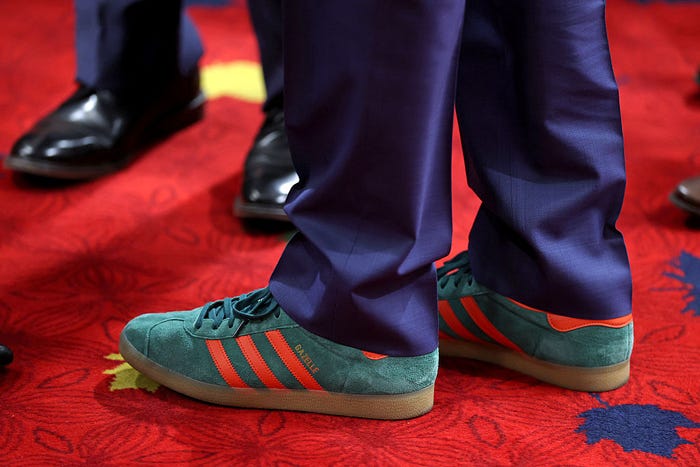
In recent years, society has embraced increasingly casual attire. Many individuals now wear pajamas to airports, and it has become common for television hosts to pair sneakers with formal suits during live broadcasts. Athleisure brands such as Vuori and Alo have capitalized on this trend, offering sweatpants priced similarly to traditional slacks. According to BofA, this casualization has peaked, with sneakers rising from 20% of the footwear market to an impressive 50%.
This shift poses challenges for Adidas, as BofA forecasts that the company’s organic sales growth will dwindle to single digits. The firm has taken the unusual step of lowering its rating from “buy” to “underperform,” indicating a lack of confidence in Adidas’ future performance. Following this announcement, Adidas shares experienced a decline of up to 7% on a single day.
Despite this bearish sentiment from BofA, other analysts remain optimistic about Adidas’ prospects. Following a challenging 2025, many experts are still bullish on the brand’s shares, although the company’s situation appears precarious. BofA also notes that competitors like Asics and On, which have benefited from the same market trends as Adidas, are likely to continue posing serious competition as consumer preferences shift from casual wear back towards sporting goods.
Adidas must also contend with the formidable presence of Nike. The sportswear giant is undergoing its own transformation under CEO Elliott Hill, with recent earnings reports highlighting strong growth in North America. While Nike’s stock has seen a decline of 14% since the start of 2025, this is significantly less than Adidas’ decline during the same period. BofA indicates that a sustained recovery for Nike could further impact Adidas, as the two companies historically experience inverse revenue growth.
Looking ahead, the upcoming World Cup, where Adidas’ brand ambassador, Lionel Messi, is expected to generate interest, may not provide the anticipated boost. BofA cautions that once the excitement of the tournament subsides, Adidas will still face the same underlying challenges it has grappled with throughout the year.
As the sneaker-with-suits trend appears to lose momentum, the potential decline of casual fashion may carry both risks and opportunities for Adidas. The company must now navigate a changing landscape where consumer preferences are evolving, as it seeks to reclaim its position in the competitive sportswear market.