UPDATE: New inflation data from Australia indicates a slight easing, with the annual rate dropping to 3.4% in November from 3.8% in October. This revelation puts the spotlight on the upcoming February 3, 2024 Reserve Bank of Australia (RBA) meeting, where a potential interest rate hike remains on the table.
The Australian Bureau of Statistics (ABS) has released its latest Consumer Price Index (CPI) data, but officials caution that this is still early in the process. This report marks only the second full monthly CPI, and the RBA is expected to wait for the complete December quarter report due on January 28 before making any significant decisions.
Despite the headline inflation decrease, core inflation pressures persist. The trimmed mean reading, which the RBA closely monitors, saw only a marginal decline from 3.3% in October to 3.2% in November. This metric is crucial as it reflects ongoing price pressures that could influence monetary policy.
Particularly concerning are the rising costs of housing, with new dwelling prices surging 2.8% and rent increasing 4.0%. Additionally, food prices remain stubbornly high, holding steady at 3.3% since June. These factors complicate the RBA’s task of managing inflation, which is still above the target range of 2% to 3%.
Market analysts are divided regarding the RBA’s next steps. Current expectations indicate about a 35% chance of a rate hike during the February meeting. Major Australian banks are split in their predictions: CBA and NAB foresee an increase, while Westpac and ANZ suggest rates will remain steady for now. However, Westpac acknowledges that risks are significant on both sides.
The RBA has signaled a growing concern over persistent inflation, hinting that policy changes may be imminent. If inflation continues to defy expectations, the RBA could be compelled to act sooner rather than later.
What does this mean for the Australian dollar? As probabilities for a February rate hike hover around 35%, traders are closely monitoring the upcoming December quarter data. This report will be pivotal in determining whether the RBA will need to take action against stubborn inflation.
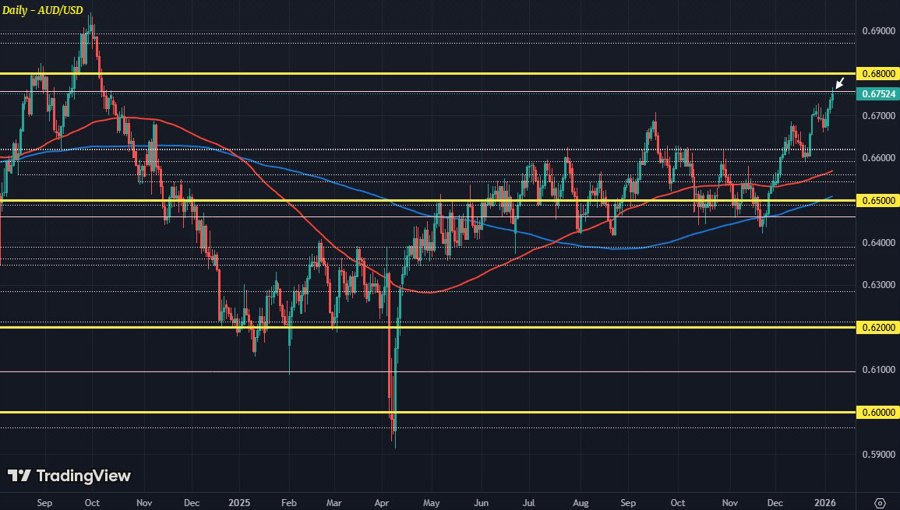
Currently, the AUD/USD currency pair remains bullish, trading at its highest level since October 2024. Although the recent inflation data caused a minor setback, the overall outlook remains positive, with prices staying above key moving averages. Resistance is expected around 0.6800, but if the RBA keeps the door open for a rate hike and broader market sentiment remains favorable, the pair could target September 2024 highs around 0.6915 to 0.6940.
The next crucial test for the Australian economy will be the December quarter report on January 28. Investors will be eager to see if inflation proves too persistent, potentially prompting the RBA to adjust its monetary policy. With significant global economic factors at play, including an upcoming US labor market report, all eyes will be on Australia as it navigates these pressing inflation challenges.