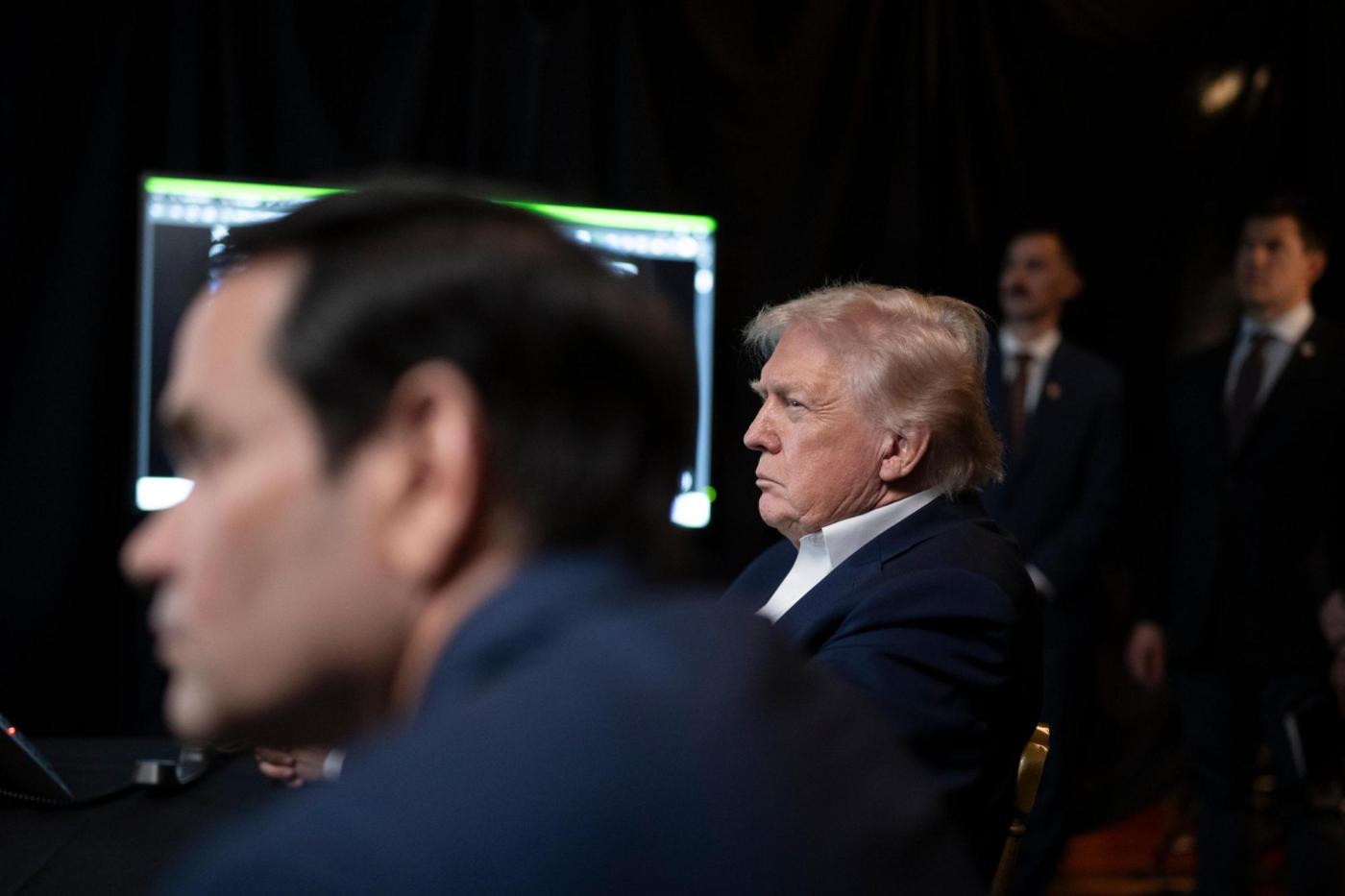
UPDATE: Former President Donald Trump has redefined American foreign policy by reviving the historic Monroe Doctrine with a controversial new corollary aimed at intervention in Latin America. This bold move, announced just this week, asserts the United States’ right to intervene when local governments fail to manage “hostile influences,” curb drug cartels, or prevent migrant surges, echoing sentiments from Teddy Roosevelt‘s 1904 provisions.
The implications of Trump’s announcement are substantial. As tensions rise in Venezuela and elsewhere in the region, this doctrine could pave the way for renewed military engagement by the U.S., a shift that many analysts argue could escalate conflicts and impact millions of lives. The urgency of this situation cannot be overstated, as the geopolitical landscape in Latin America faces significant challenges from both local and foreign actors.
Historically, the Monroe Doctrine has served as a key tenet of American foreign policy since its inception in December 1823, when President James Monroe declared that the Western Hemisphere was “henceforth not to be considered for future colonization by any European powers.” This declaration was initially a protective measure against European encroachment on newly independent nations.
The original doctrine has been adapted by various presidents over the years, responding to shifting geopolitical realities. From James K. Polk‘s adjustments during the 1848 Yucatán conflict to William McKinley‘s military actions in the 1898 Spanish-Cuban conflict, each iteration has reflected the prevailing national interests. More recently, Secretary of State John Kerry declared the doctrine “dead” in 2013, but Trump’s revival signals a possible return to interventionist policies that many believed had faded.
As Trump’s administration prepares to implement this new corollary, experts warn of potential repercussions. John J. Tierney Jr. from the Institute of World Politics believes Trump’s approach could lead to a more aggressive U.S. stance in the region. The revival of such an assertive doctrine may complicate diplomatic relations and provoke resistance from Latin American countries wary of U.S. intervention.
Looking ahead, the next steps for the U.S. will be closely monitored. Analysts will be watching for any military movements or diplomatic announcements that may indicate a shift in policy. The fundamental question remains: will this new interpretation of the Monroe Doctrine lead to a more stable Latin America, or will it incite further unrest?
In a world increasingly influenced by China‘s expanding presence in Latin America, Trump’s hardline stance raises the stakes even higher. The enduring legacy of the Monroe Doctrine proves that it is not merely a historical footnote but a living doctrine that continues to shape U.S. foreign policy.
As this situation develops, it is crucial for citizens and policymakers alike to stay informed on the implications of Trump’s actions. The potential for renewed U.S. intervention in Latin America could have lasting consequences for the region and beyond. Stay tuned for updates as this story unfolds.