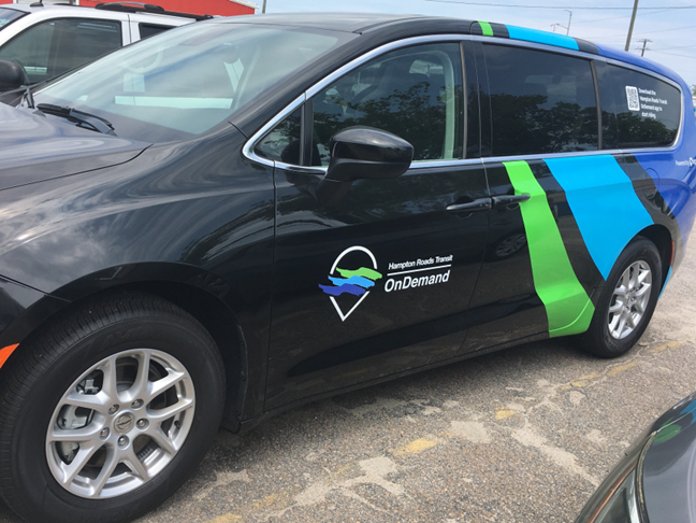
A new $2-per-ride on-demand transit program from Hampton Roads Transit (HRT) will expand into Chesapeake and Hampton starting in January 2025. This initiative aims to enhance transportation options in areas where traditional bus services may not be available. The program allows passengers to reserve rides through the HRT OnDemand app, enabling pickups at designated locations within 15 minutes, while sharing vans with other riders. These vans connect to existing local bus routes, making public transport more accessible.
While this expansion is a positive development for Chesapeake and Hampton, the future of the HRT OnDemand service in Virginia Beach remains uncertain. The program, which has operated as a pilot for the past year, is scheduled to conclude on January 10, 2025, unless the City Council chooses to renew it. According to Virginia Beach spokesperson Ali Weatherton-Shook, the decision rests with the Council, which has yet to schedule a vote on the program’s continuation. City staff are exploring options for future microtransit services across the city.
HRT’s expansion was made possible in part due to a $3.5 million state grant utilized for a pilot program that began in October 2024. The goal of this initiative was to boost ridership by 20%. Following the success of the pilot, Chesapeake and Hampton have opted to launch their versions of the program. Thomas Becher, a spokesperson for HRT, noted that additional details about the service would be announced closer to its launch.
In the meantime, Newport News has renewed its participation in the program for another year, while Norfolk has decided not to participate. According to Becher, localities have contributed a 20% funding match alongside other investments, underscoring the commitment of these cities to enhance public transport options.
“The cities see the value of this in augmenting transit in areas where fixed-route bus service either does not exist or where residents lack vehicles,” Becher stated. “We see a lot of growth potential in all the cities we serve.”
The pilot program’s ridership statistics highlight its impact. From October 14, 2024 to November 30, 2025, Virginia Beach recorded approximately 31,000 rides, while Newport News saw over 49,000 rides. The Virginia Beach service was available within a 15-square-mile zone encompassing key locations such as Newtown Road Light Rail Station and Virginia Beach Town Center, whereas Newport News serviced a 20-square-mile area that includes City Center and Christopher Newport University.
HRT’s initiative aligns with its broader system optimization plan, aimed at improving services and reducing costs to attract state funding for operational support. The HRT OnDemand service operates from 5 a.m. to 9 p.m. on weekdays and from 7 a.m. to 8 p.m. on weekends, providing flexibility for users.
As the pilot programs continue, Becher emphasized that each city has unique transportation needs. While the Peninsula may rely more heavily on bus services, Norfolk benefits from a combination of buses, ferries, and light rail. The varying responses from these cities to the rideshare pilot program will contribute valuable data for future transportation planning.
“It’s more about the cities’ decisions and how that may connect with their existing transit networks,” Becher explained. “We’re looking at ridership and studying what the cities are paying, all of which will be important data points moving forward.”