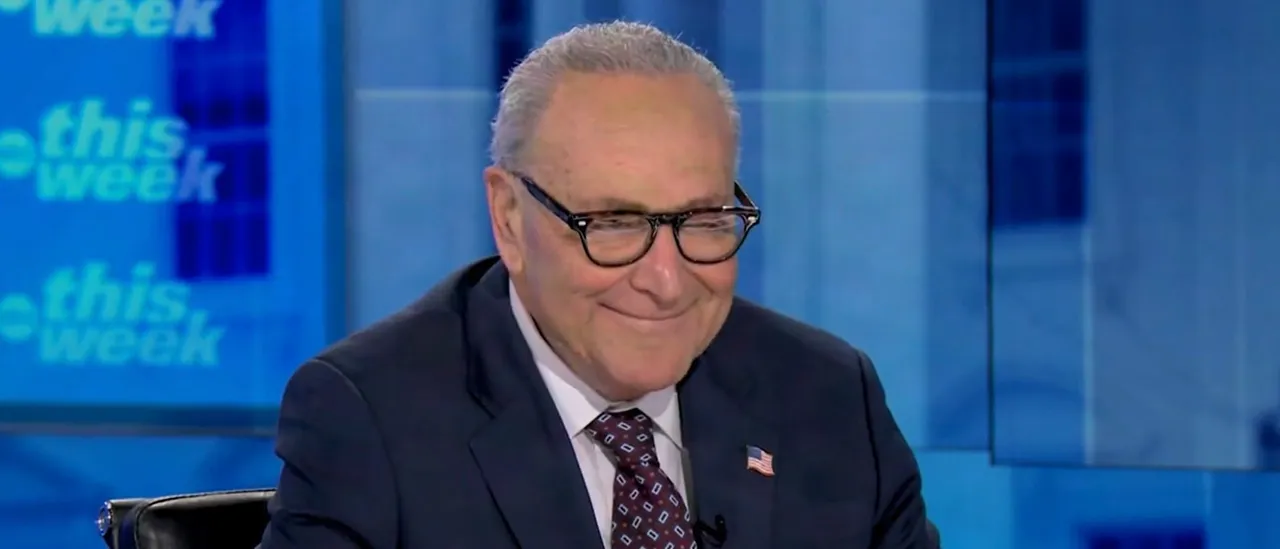
Senator Chuck Schumer of New York announced on “This Week” that he intends to introduce a resolution under the War Powers Act. This move aims to prevent any further military operations by the Trump administration in Venezuela. The announcement follows President Donald Trump’s claim that a law enforcement operation, supported by U.S. military forces, led to the arrest of Venezuelan President Nicolas Maduro and his wife Cilia Flores in Caracas.
Schumer criticized the operation as “lawlessness” and emphasized the need for Congressional oversight. He stated, “The American people this morning, George, are scratching their heads in wonderment and in fear of what the president’s proposed.” Schumer expressed concerns about U.S. intervention in Venezuela, arguing that past attempts at regime change often result in significant costs for American taxpayers, both in terms of lives and finances.
During a press conference, Trump asserted that the United States was “running” Venezuela and named key officials, including Marco Rubio and Secretary of War Pete Hegseth, who would oversee the operation. Schumer countered, saying, “They went inside Venezuela, bombed civilian as well as military places, and it’s a violation of the law to do what they did without getting the authorization of Congress.”
Following this operation, critics, including podcasters Keith Olbermann and Dean Obeidallah, called for Trump’s impeachment on social media platforms. Congressional Democrats rallied against what they labeled an illegal war, with Schumer accusing the administration of misleading both the public and Congress about the military actions in Venezuela.
Congressional Response and Historical Context
In response to questions from host George Stephanopoulos, Schumer explained that the resolution under the War Powers Act is privileged, meaning it cannot be blocked by Republican opposition. He noted that he, along with Senators Tim Kaine and Rand Paul, sponsors the resolution, which is expected to be brought to the floor for a vote this week. If passed by both houses, the resolution would restrict further military actions in Venezuela without Congressional approval.
Schumer’s current stance contrasts sharply with his comments from March 2020, when he criticized Trump for not doing enough to remove Maduro from power. At that time, Schumer remarked, “The President brags about his Venezuela policy? Give us a break. He hasn’t brought an end to the Maduro regime,” highlighting a shift in his approach as the political landscape evolves.
This latest development in U.S. foreign policy towards Venezuela underscores the ongoing debate over military intervention and the necessity of Congressional oversight in such actions. As tensions rise, both the administration and Congress face scrutiny over their roles in shaping the future of Venezuela.