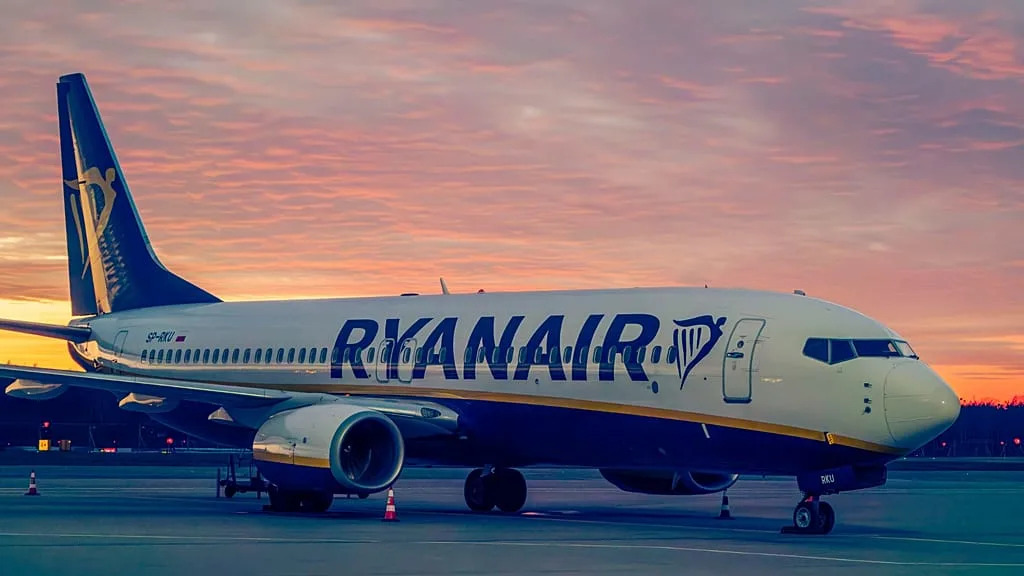
Ryanair announced significant cuts to its European flight schedule for 2026, affecting millions of passengers. The budget airline will discontinue numerous routes in Germany, Spain, France, Belgium, Portugal, and parts of the Balkans, resulting in a reduction of approximately three million seats. This decision is largely attributed to escalating operational costs, including high taxes and air traffic control fees imposed by various countries.
Major Cuts in Germany and Spain
In October 2025, Ryanair revealed plans to eliminate 24 routes to and from Germany, which translates to a loss of nearly 800,000 seats for the Winter 2025/2026 schedule. Airports impacted include major hubs such as Hamburg, Berlin, and Frankfurt-Hahn, with operations at Leipzig, Dresden, and Dortmund set to remain suspended throughout 2026. Ryanair’s CEO, Michael O’Leary, criticized the German government for imposing high aviation taxes and fees that hinder the airline’s competitiveness, stating, “Germany remains among the worst recovered air traffic markets in Europe, operating at just 88 percent of pre-COVID levels.”
The airline’s cuts extend to Spain, where it plans to reduce capacity by approximately 1.2 million seats during the summer 2026 schedule, following a winter reduction of about one million seats. Key regional routes, including flights to Asturias and Vigo, will be terminated. Ryanair has also announced the closure of its base at Santiago de Compostela, citing ongoing disputes with the Spanish airport operator Aena over rising taxes and fees.
Route Reductions in France, Belgium, and Portugal
France is also facing route reductions, with Ryanair cutting 750,000 seats and discontinuing 25 routes in the Winter 2025 schedule, primarily due to increased taxes. Notably, flights to Bergerac, Brive, and Strasbourg have been suspended, although the airline plans to resume services to Bergerac in Summer 2026 after negotiating with French authorities. Ryanair’s Chief Commercial Officer, Jason McGuinness, indicated that further cancellations might occur if conditions do not improve.
In Belgium, Ryanair will eliminate 20 routes and cut one million seats from its Winter 2026/27 schedule. This reduction is largely driven by a new aviation tax that will double the charge to €10 per passenger. The airline emphasized the need for the Belgian government to reconsider this tax to stimulate growth in the aviation sector.
Additionally, Ryanair is set to discontinue all six routes to and from the Azores in Portugal by the end of March 2026, affecting around 400,000 passengers annually. The airline has attributed this decision to high air traffic control fees and a new €2 travel tax, criticizing the Portuguese government for not fostering a competitive environment for low-cost carriers.
Broader Impact and Future Plans
Ryanair’s route cuts are not limited to Western Europe; the airline also plans reductions in Bosnia and Serbia during the summer of 2026. This move aims to reallocate resources to markets with increasing demand, such as Croatia.
As Ryanair adjusts its operations, it has signaled a willingness to expand capacity in the future if governments address the issues surrounding high costs. The airline’s announcements highlight ongoing challenges in the European aviation landscape, where regulatory environments and operational costs vary significantly between countries.
Overall, Ryanair’s strategic decisions reflect the complexities of maintaining a budget airline model amid rising expenses and competitive pressures across the continent. The airline’s future direction will depend on the responsiveness of governments to these pressing concerns.