As Indiana prepares for its legislative session in 2026, education issues are set to take center stage. Lawmakers will address matters such as stricter cellphone regulations, a renewed focus on STEM (Science, Technology, Engineering, and Mathematics) education, and strategies to enhance school efficiency. The session, which begins next week, will be notably shorter, concluding by late February after an earlier two-week redistricting meeting in December.
Senate bills must be filed by January 9, while House bills have a deadline of January 14. Several education-related proposals have already gained traction, including a significant cellphone ban that was discussed in the Senate education committee in December. Despite this, the Republican caucus leaders in the General Assembly have yet to officially announce their priority agendas.
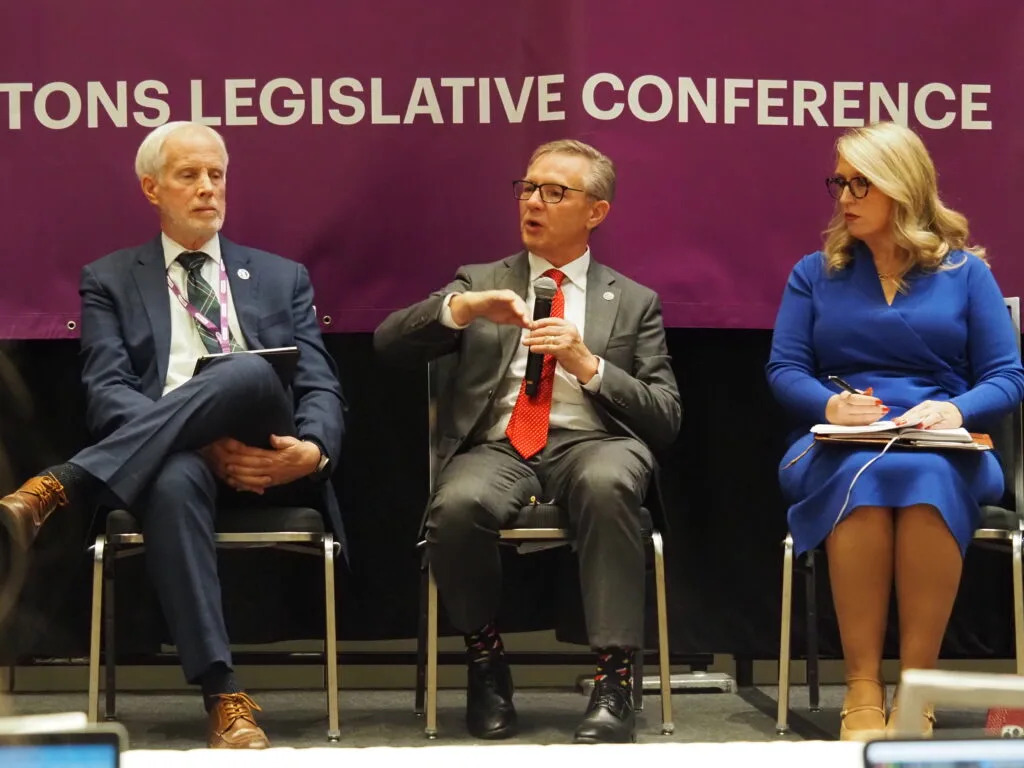
During a recent legislative conference in Indianapolis, Indiana Secretary of Education Katie Jenner highlighted the challenges of academic recovery, declining enrollment, and student disengagement. These concerns have intensified discussions about technology’s role in education, particularly regarding students’ cellphone usage.
Proposed Cellphone Ban Sparks Debate
One of the most prominent topics is whether Indiana should expand its cellphone restrictions to encompass the entire school day. Currently, a law passed in 2024 allows schools to prohibit cellphone use during instructional time unless expressly permitted by a teacher. The new measure, known as Senate Bill 78, seeks to ban cellphone use “from bell to bell,” including during lunch and passing periods, with a few exceptions.
Sen. Jeff Raatz of Richmond, chairman of the Senate Education Committee and the bill’s author, indicated that a vote could be expected early in January. Proponents argue that the expanded ban will help reduce distractions and enhance student focus and mental health. On the other hand, some parents and students have expressed concerns regarding safety and the need for local control.
Jenner voiced her worries about the impact of technology on children, noting an alarming trend of younger children engaging with social media. “We are seeing seven- and eight-year-olds with social media accounts,” she stated. “We are seeing nine-year-olds on anxiety medicine because they’re obsessed with the number of likes and the comments.”
Focus on Literacy and STEM Education
In addition to discussions about cellphone regulations, education officials are focusing on improving literacy rates. Recent state investments have led to significant gains, with a reported 5% increase in reading proficiency. Current law mandates that schools with fewer than 70% of students reading proficiently must participate in the state literacy cadre program, which offers targeted, evidence-based instructional support.
Jenner suggested that adjustments to this percentage might be necessary to ensure effective support for struggling schools. “We’ve seen some great success in reading, but we have a lot more work to do,” she said, emphasizing that middle school literacy remains a pressing issue.
There is also a renewed emphasis on STEM education, which has lagged behind recent literacy advancements. Rep. Bob Behning expressed optimism that Indiana’s literacy initiatives could serve as a model for enhancing math education, particularly early numeracy. He noted that many educators lack training in foundational math skills, which hampers their ability to improve student outcomes.
Funding for education continues to be a contentious topic, particularly for districts with weak property-tax bases. Rep. Ed DeLaney, a Democrat from Indianapolis, pointed out that the share of state funding for public schools has dwindled over the past decade and called for increased state investment to support high-need districts.
As Indianapolis leaders advance recommendations for managing school facilities and transportation, concerns about local control and the potential for these models to spread statewide remain. Jenner urged legislators to consider student outcomes and fiscal health when making decisions, rather than relying solely on enrollment figures.
Education advocacy groups are also mobilizing to push for legislative priorities, including equitable funding for districts with limited property-tax bases and caution against imposing additional mandates without adequate funding. The Indiana Coalition for Public Education and the Indiana School Boards Association are among those advocating for these changes, with a focus on providing local flexibility and reducing regulatory burdens.
With the 2026 session approaching, Indiana’s education landscape is poised for significant discussions and potential reforms aimed at addressing the challenges facing students and schools across the state.