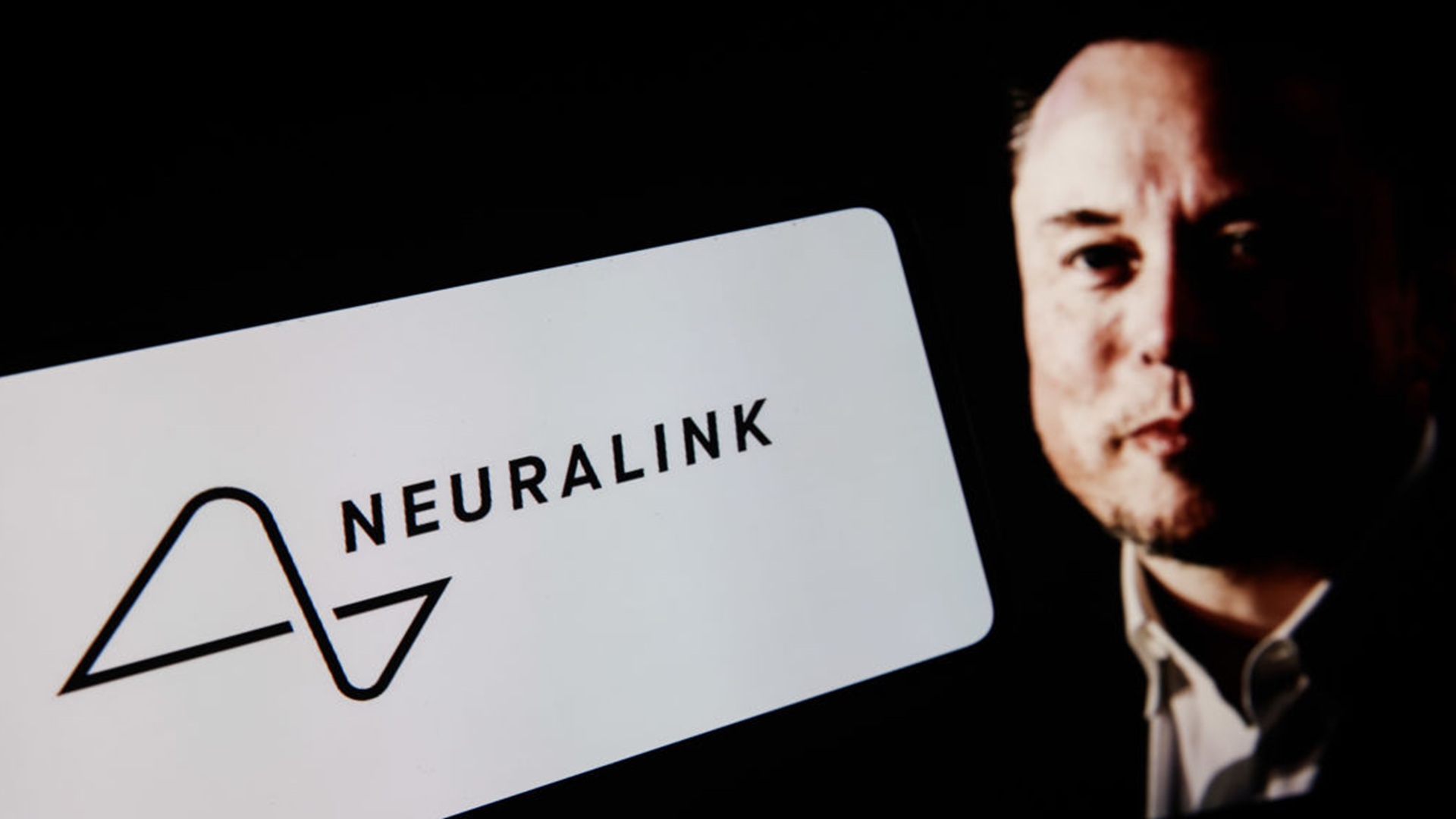
Elon Musk revealed that his brain implant company, Neuralink, plans to commence “high-volume production” of its brain-computer interface devices in 2026. In a post shared on the social media platform X, Musk stated that Neuralink will also transition to an almost entirely automated surgical procedure for implanting these devices. The implants are designed to assist individuals with conditions like spinal cord injuries by facilitating direct interaction with computers.
Neuralink’s journey into human trials began in 2024 after the U.S. Food and Drug Administration (FDA) addressed safety concerns that had led to an initial rejection of the company’s application in 2022. Since then, the first patient has successfully demonstrated the ability to play video games, browse the internet, and control a laptop cursor using the brain implant. In September, Neuralink reported that twelve individuals worldwide with severe paralysis now use the implants to manipulate digital and physical tools solely through thought.
Funding and Future Plans
Neuralink secured $650 million in a funding round in June, positioning itself for significant scale-up as it moves towards its production goals. This expansion aligns with Musk’s broader ambitions across various industries for the year 2026, which include advancements in space exploration, artificial intelligence, and urban transportation.
In the realm of space, SpaceX aims to launch its first Starship V3 spacecraft in 2026. This upgraded vehicle will feature the new Raptor V3 engine and is set to conduct propellant transfer tests in orbit. Such capabilities are crucial for supporting future long-distance missions to the Moon and Mars. Additionally, SpaceX plans to deploy Starlink V3 satellites, which promise improved performance and faster internet connectivity.
Another key initiative from Neuralink is the introduction of the Blindsight implant, which aims to restore vision for individuals who are completely blind. This implant is expected to begin patient trials in 2026 and works by using ultra-fine threads to stimulate the visual cortex, creating perceptions of light and shapes.
Expanding Beyond Neuralink
In urban transportation, Musk’s Boring Company is preparing to launch the first section of its Nashville Loop in spring 2026. This underground transit system will connect downtown Nashville, the Convention Center, and Nashville International Airport, promising a travel time of approximately eight minutes. The project is designed to alleviate surface traffic congestion while providing zero-emission transportation options.
Moreover, Tesla is gearing up for a production ramp-up in 2026, with plans to initiate Cybercab production in April. The company is also set to mass-produce the Tesla Semi and Optimus Gen 3 humanoid robots. Additionally, Tesla plans to launch its Full Self-Driving feature in an unsupervised mode and expand its energy storage operations with Megapack 3 and Megablock systems for large-scale grid storage.
In the field of artificial intelligence, Musk’s startup xAI is working to expand its Colossus supercomputer cluster in Memphis, Tennessee. The company recently acquired a third building to enhance its training capacity to nearly two gigawatts. Concurrently, the social media platform X, also owned by Musk, is contemplating increasing creator payouts to compete with platforms like YouTube, as part of a strategy to retain original content.
Musk’s ambitious plans for 2026 across multiple technology sectors reflect his commitment to advancing innovation and addressing complex challenges. As Neuralink moves toward automated surgeries and mass production, the year promises to be pivotal for Musk’s various ventures, potentially reshaping industries and enhancing the lives of individuals facing significant health challenges.