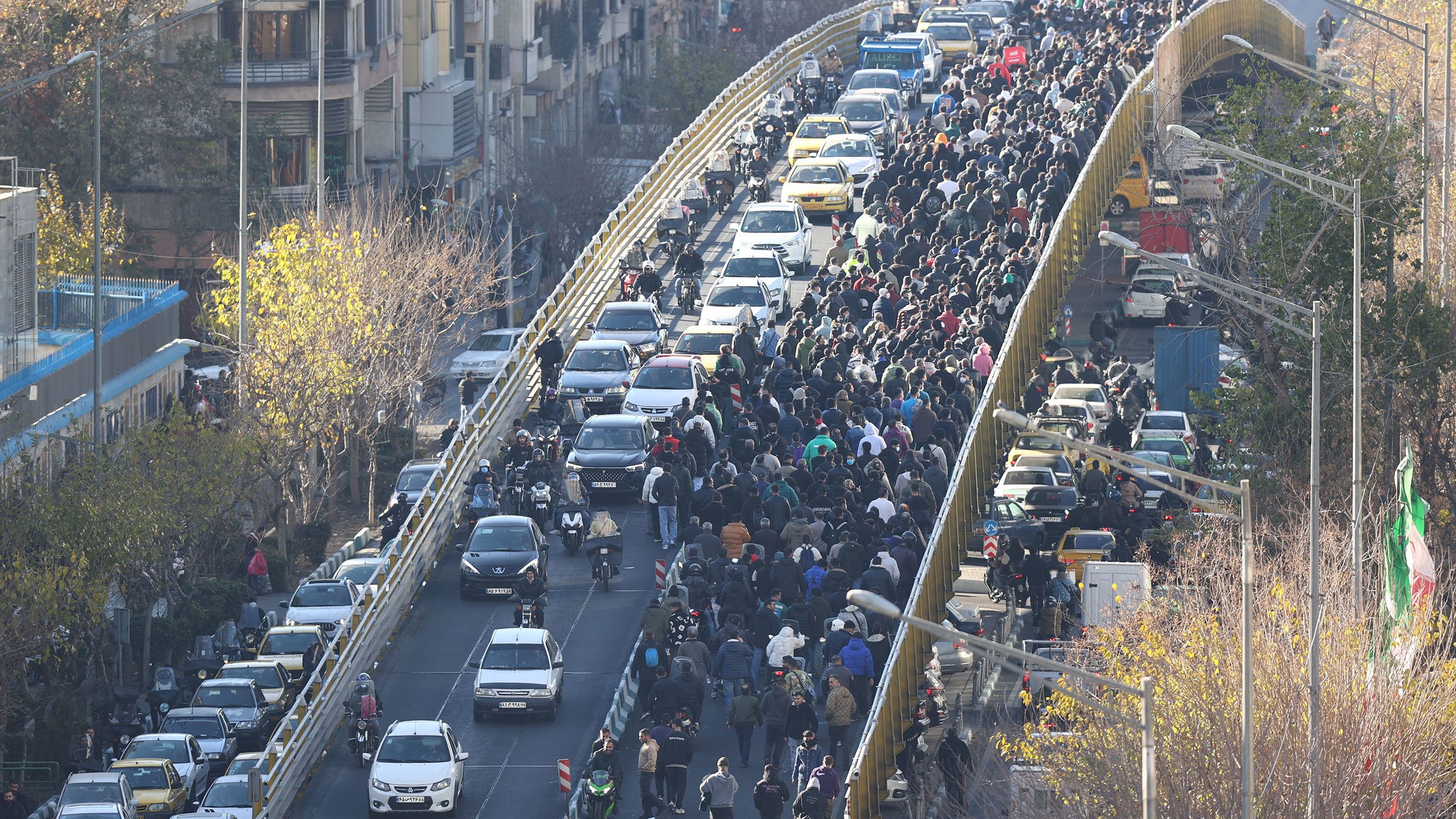
Iran has appointed a new governor for its central bank following significant protests triggered by a sharp decline in the national currency. On Wednesday, President Masoud Pezeshkian‘s Cabinet selected Abdolnasser Hemmati, a former economics minister, to lead the Central Bank of the Islamic Republic of Iran. He replaces Mohammad Reza Farzin, who resigned just one day after protests erupted across the country, marking some of the largest demonstrations in three years.
The protests were largely fueled by the Iranian rial’s plunge against the U.S. dollar, which reached a staggering 1.38 million rials on Wednesday. This is a dramatic increase from 430,000 rials when Farzin assumed office in 2022. Economic experts have pointed to an inflation rate of approximately 40% as a key factor contributing to growing public discontent.
Hemmati’s primary agenda will focus on curbing inflation and stabilizing the currency. He also aims to address issues related to the mismanagement of banks. Fatemeh Mohajerani, the government’s spokesperson, emphasized these priorities in a statement on social media platform X.
Hemmati, 68, previously served as Minister of Economic and Financial Affairs under Pezeshkian but faced dismissal in March 2023 due to accusations of mismanagement. Critics alleged that his policies contributed to the rial’s weakening against foreign currencies.
The ongoing economic crisis has exacerbated living conditions, with rising prices for essential goods further straining household budgets. The situation has been intensified by Western sanctions on Iran related to its nuclear program. Recent changes in gasoline prices are expected to worsen inflation, complicating efforts to restore economic stability.
In response to the unrest, Mohammad Movahedi Azad, Iran’s Prosecutor General, warned against any attempts to shift the narrative from economic grievances to issues of public safety or foreign intervention. He stated that such actions would provoke a “strong reaction” from authorities.
Historically, the value of the rial has fluctuated significantly. In March 2015, prior to the implementation of the nuclear agreement that lifted international sanctions, the currency was valued at 32,000 rials to the dollar. The U.S. withdrew from that agreement in May 2018 under President Donald Trump, leading to renewed sanctions and further economic strain.
As protests continue, local reports indicate that many merchants and traders closed their businesses in key markets of Tehran, as well as in cities such as Shiraz and Kermanshah, in solidarity with demonstrators. Tensions escalated recently, with reports of violence during protests, including a breach of a governor’s office that resulted in injuries to law enforcement officers.
In the face of these challenges, Hemmati’s appointment signals a crucial moment for Iran’s economic leadership as the country grapples with severe inflation, public unrest, and the need for effective governance in a tumultuous environment.