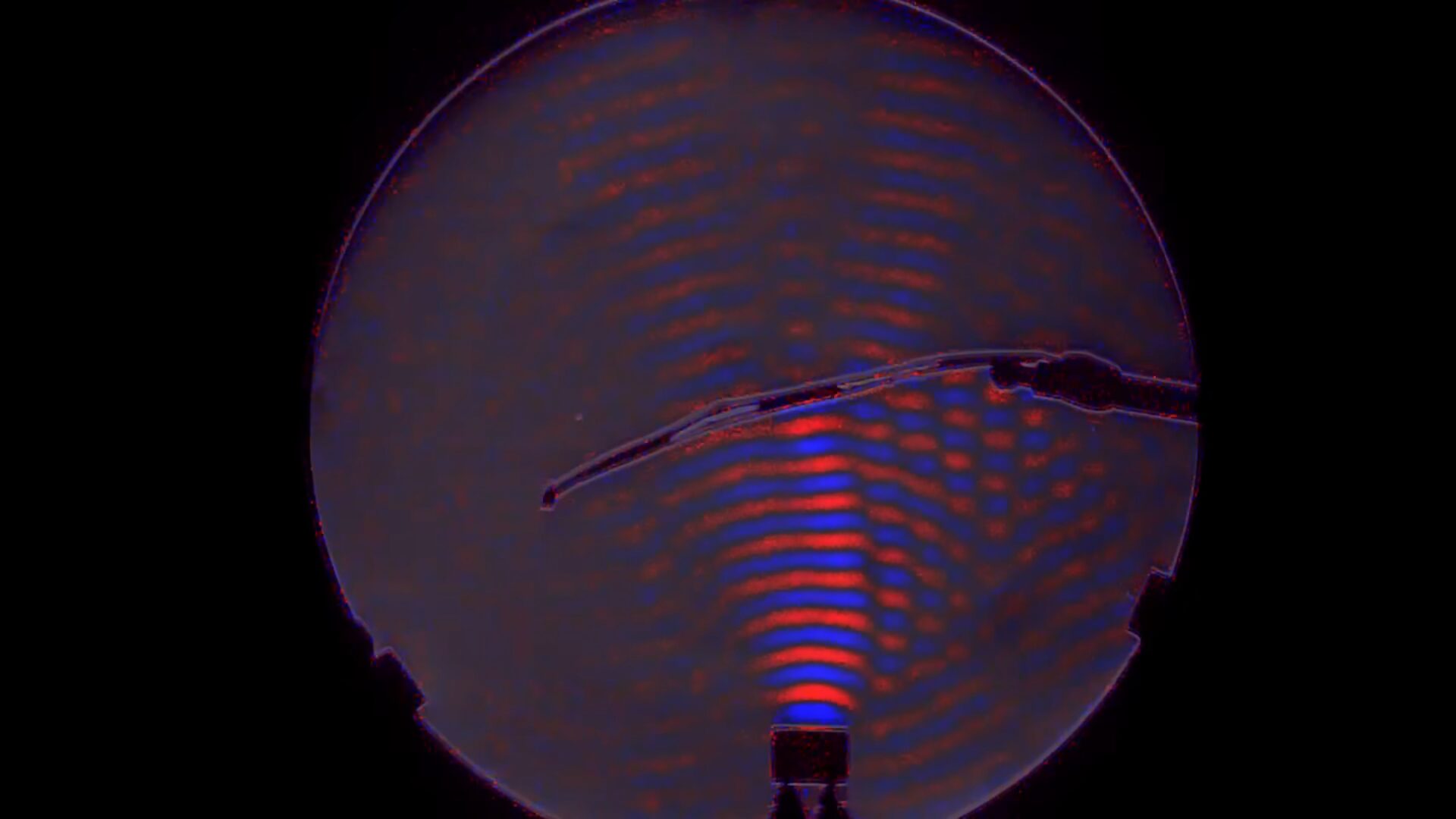
A new project by PlasmatronX enables individuals to visualize sound waves using a cost-effective camera setup priced under $200. This innovative approach employs a technique known as Schlieren imaging, typically used to observe air currents, but adapted to capture the pressure waves we perceive as sound.
How It Works
The core of this project rests on the use of a concave mirror, which amplifies the refraction of air densities altered by sound waves. Unlike traditional Schlieren setups that focus on heat-induced air movement, PlasmatronX targets variations in air pressure caused by audible sounds. This unique method allows for a visual representation of sound, demonstrating how sound waves interact with the surrounding environment.
To effectively capture these sound waves, the system must synchronize both audio and optical elements. High-speed cameras typically required for this process can be prohibitively expensive, but PlasmatronX has devised a more accessible solution. The project involves modifying audio circuits to eliminate high-pass filters and overvolting the LED flash to create a rapid strobe effect. This ensures that the captured images reflect the fleeting nature of sound waves.
The complete project details, including instructions for building a similar setup, are available on PlasmatronX’s GitHub page. This resource aims to empower enthusiasts and developers to experiment with sound visualization techniques.
Expanding Imaging Techniques
While visualizing sound is an emerging concept for many, it is part of a broader trend in innovative imaging technologies. Various forms of unconventional imaging have gained popularity, allowing for unique interpretations of physical phenomena. For instance, PlasmatronX also references cameras designed to visualize light waves, showcasing the potential for technology to reveal aspects of our world that are typically invisible to the naked eye.
As this project progresses, it not only opens new avenues for creativity and exploration in sound visualization but also invites a wider audience to engage with technology in an accessible manner. The combination of affordable components and user-friendly instructions may inspire a new generation of makers and experimenters eager to explore the intersections of sound and imagery.
This initiative by PlasmatronX illustrates how innovation can democratize technology, allowing anyone with curiosity and a modest budget to engage with advanced concepts in science and art.