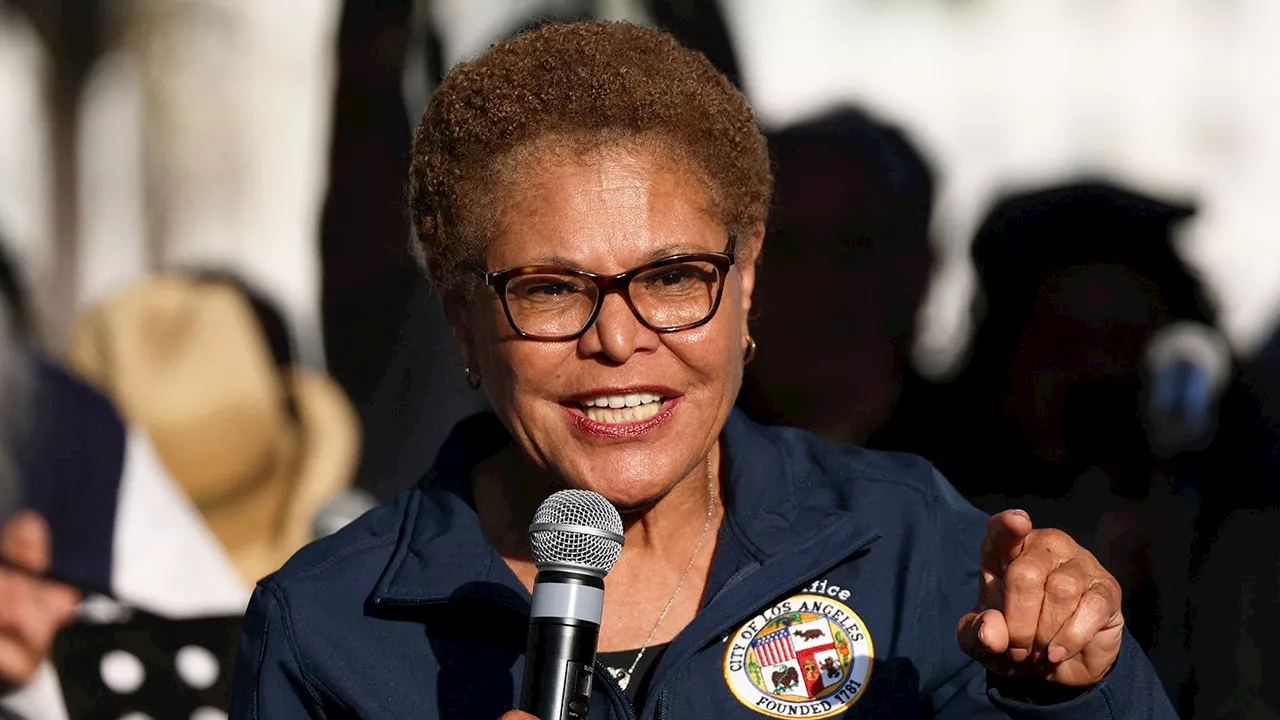
UPDATE: Los Angeles Mayor Karen Bass has voiced her deep concern over a significant rise in Latino recruits joining the U.S. Border Patrol, a trend driven largely by financial incentives amidst challenging economic conditions. This urgent issue highlights the complex realities faced by many Americans today.
In a powerful interview with Wolf Blitzer on ‘The Situation Room’, Bass lamented the implications of this trend, stating, “I think it’s sad… their primary incentive is financial,” reflecting the harsh economic landscape affecting millions. The discussion follows a report revealing that applications to the Border Patrol have surged by 70% since last year, with over half of the agents currently serving on the southern border being Hispanic.
This recruitment spike coincides with the Trump administration’s controversial revival of neighborhood checks for citizenship applicants, a strategy last seen during the first Bush administration. The program has raised alarms and questions about its impact on community relations and the immigrant experience in the U.S.
In the same segment, recruit Juan Peralta responded to Blitzer’s probing question about the moral implications of arresting fellow Latinos. Peralta stated, “They didn’t come in the right way. So, they aren’t my kind,” a remark that underscores the internal conflict many face within the agency.
These developments come as the Department of Homeland Security (DHS) touts a decrease in overall apprehensions, reporting the lowest numbers since 1970. In fiscal year 2025, U.S. Customs and Border Protection (CBP) recorded 237,565 southwest border apprehensions, a stark contrast to the 201,780 apprehensions noted in 1970. This context raises critical questions about the evolving role of border enforcement and its implications for Latino communities.
Mayor Bass’s comments signal a growing concern among leaders about how these shifts may impact community trust and the lived experiences of Latinos across the nation. “I definitely am concerned about that report,” she concluded, emphasizing the need for a comprehensive dialogue about the motivations behind these recruitment trends.
As this situation develops, the implications for both community relations and national policy will be crucial to monitor. The intersection of economic necessity and the moral dilemmas faced by recruits will likely fuel ongoing discussions about immigration and border security in the coming months.
Stay tuned for further updates on this urgent issue as it evolves in the weeks ahead.