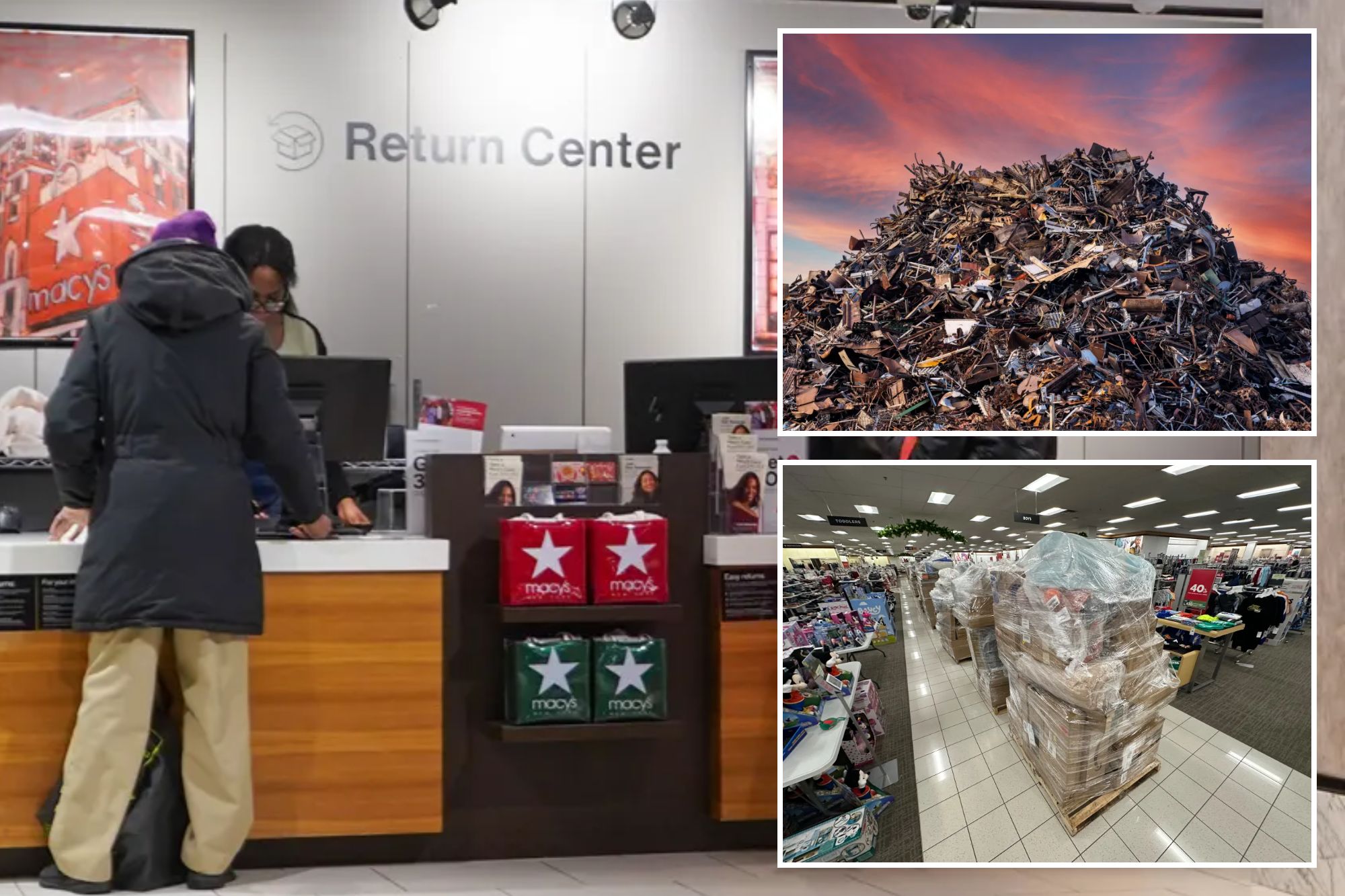
The holiday season is winding down, but the peak period for product returns is just beginning. The National Retail Federation estimates that approximately 17% of holiday purchases will be returned this year, prompting retailers to extend return windows and increase staffing to manage the anticipated influx. A significant factor driving these returns is uncertainty; purchasing gifts for others often involves guessing their preferences. Returns are particularly high for online purchases, where selecting the right size or color can be challenging when relying solely on images.
Saskia van Gendt, chief sustainability officer at Blue Yonder, notes that clothing and footwear have the highest return rates due to fit being a critical consideration. Each return not only impacts retailers financially but also carries an environmental cost. The process of shipping goods, whether to customers or back to retailers, requires considerable energy and resources, thus contributing to greenhouse gas emissions.
The environmental implications of returns are significant. When a product is returned, it typically undergoes a similar shipping process as when it was initially sold. This repetition increases the item’s carbon footprint by an estimated 25% to 30%, according to Joseph Sarkis, a supply chain management professor at Worcester Polytechnic Institute. Furthermore, around one-third of returned items do not make it back to consumers, often because the costs of refurbishing or reselling them exceed their value.
Retailers face challenges when managing returns, especially for low-cost items such as a $6 silicone spatula. The costs associated with inspecting and potentially reselling returned products can lead to a loss for companies. If a returned item is deemed unsellable, it may end up in a landfill, further exacerbating the issue of waste. Christopher Faires, assistant professor of logistics and supply chain management at Georgia Southern University, emphasizes that even “free” returns are not truly without cost, as the expenses are ultimately integrated into retail prices.
To mitigate the impact of returns, consumers can take proactive steps. Danni Zhang, a lecturer in logistics and operations management at Cardiff University, suggests minimizing damage to items during return processes and reusing packaging. Quick returns are also crucial; for instance, an unwanted holiday gift has a better chance of being resold when returned promptly rather than weeks later.
Shopping in physical stores, as opposed to online, can further reduce return rates. In-person purchases tend to be more accurate, and returning items to brick-and-mortar locations allows for quicker restocking, thereby reducing waste. Zhang advocates for in-store returns, stating that they enable managers to reintroduce products to the market faster.
To further decrease returns, consumers should avoid “bracketing behavior,” where multiple sizes or colors of an item are purchased with the intent to return the unwanted options. This practice is not sustainable and contributes to unnecessary waste. For those buying gifts, opting for a gift card can eliminate guesswork and the associated risk of returns.
Retailers can also play a role in reducing returns by providing clearer product descriptions that outline environmental impacts and costs associated with returns. While some companies, like Amazon, have begun implementing charges for certain returns, the broader retail industry remains cautious about communicating these challenges directly to consumers.
Technological advancements may offer solutions as well. Blue Yonder’s acquisition of Optoro, a company specializing in return management systems, aims to streamline the process of assessing the condition of returned items and directing them to the appropriate resale channels. This shift toward digitization can help minimize landfill waste and the carbon footprint associated with returns.
Clothing items, particularly where sizing can vary widely across brands, represent a significant portion of returns. Enhancements in sizing accuracy and the use of 3D imaging or virtual reality could assist consumers in making more informed purchases, thus reducing the likelihood of returns.
As the holiday season draws to a close, both consumers and businesses have a vested interest in addressing the challenges posed by product returns. By taking steps to minimize the environmental impact of returns, the retail industry can contribute to a more sustainable future while also managing costs effectively.