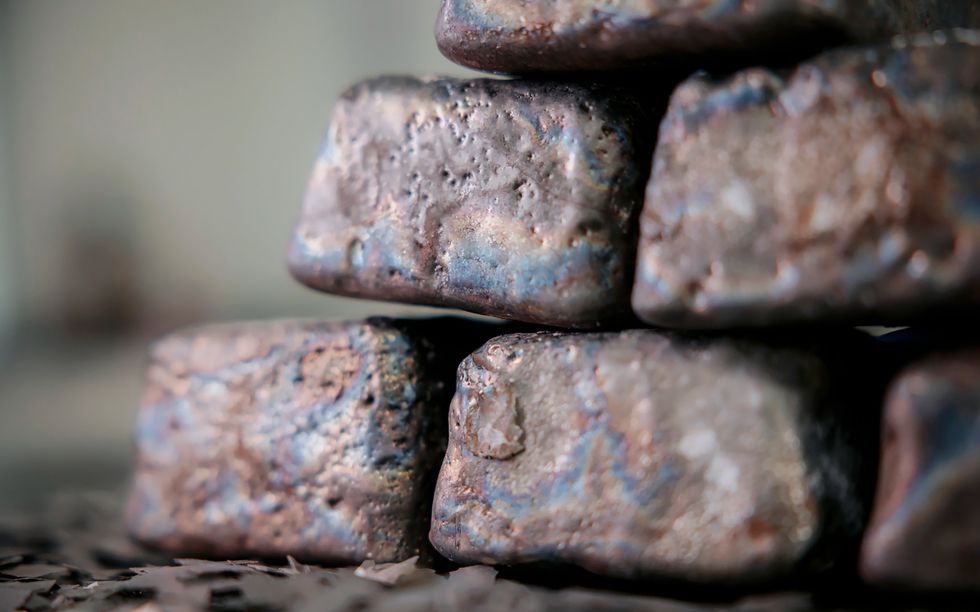
In 2025, significant advancements in the fields of rare earth elements, magnets, and electric motors garnered widespread attention. The Mountain Pass mine in California’s Mojave Desert resumed industrial-scale production of rare-earth oxides, specifically neodymium and praseodymium, marking a pivotal moment in the geopolitics surrounding rare earth supply chains.
Historically, the Mountain Pass mine was a major contributor to the global supply of rare earth elements, producing as much as 70 percent of the world’s output from the mid-1960s to the 1980s. However, environmental challenges and competition from Chinese producers led to a significant decline in its operations. Today, China controls between 85 and 99 percent of the global market for these elements, which are crucial for technologies ranging from military systems to electronics.
U.S. Efforts to Rebuild Rare Earth Supply Chains
In response to dependence on Chinese rare earths, the U.S. government, particularly under the Trump administration, intensified efforts to establish alternative supply chains. A notable investment included $400 million from the United States Department of Defense in MP Materials to secure a 15 percent stake in the company and guarantee a price floor for critical oxides, significantly higher than current prices from China.
Despite these developments, the total output from Mountain Pass remains modest compared to China’s vast production capabilities. The U.S. strategy evolved throughout the year, shifting from initial exploratory partnerships with countries like Ukraine to a more focused approach involving Canada and Australia. Canada, which possesses notable rare earth reserves and operates one of the few significant refining plants outside Asia, has emerged as a key player in the effort to diversify supply.
Innovations in Magnet and Motor Technology
As the year progressed, various companies made strides in manufacturing rare-earth magnets domestically. In early 2025, MP Materials announced the commencement of neodymium-iron-boron magnet production at a new facility in Texas, aiming for an output of 2,000 to 3,000 tonnes per year. A significant partnership with Apple, valued at $500 million, was established to supply magnets for Apple’s devices starting in 2027.
In the realm of electric motors, startups and established companies alike pursued innovative solutions to address the challenges of electrifying aviation. Hinetics, a company spun out of the University of Illinois Urbana-Champaign, is working on high-temperature superconducting motors intended for commercial aircraft. With expected power outputs of 40 kW/kg, this technology could revolutionize passenger aviation.
Airbus has also announced ambitious plans to develop a zero-emission airliner powered by a superconducting motor fueled by liquid hydrogen, reflecting a commitment to sustainable aviation. However, CEO Guillaume Faury noted that significant breakthroughs in this area may not materialize before the 2040s.
Additionally, researchers at Victoria University in New Zealand have been exploring advanced propulsion methods for space travel. Their magnetoplasmadynamic thrusters, which utilize high-temperature superconducting tape, aim to enhance efficiency and reduce the energy required for space missions.
Despite these technological advancements, geopolitical challenges persist. Greenland, rich in critical minerals, has been identified as a potential target for U.S. annexation interest, primarily due to its rare earth deposits. However, significant obstacles remain in terms of infrastructure and environmental considerations that would complicate large-scale mining operations.
As 2025 drew to a close, the developments in rare earth elements, magnets, and electric motors underscored the intricate interplay of technology and geopolitics, with implications that extend beyond national borders. The year witnessed a renewed focus on domestic production and international collaboration, setting the stage for a more resilient and diversified supply chain in the years to come.