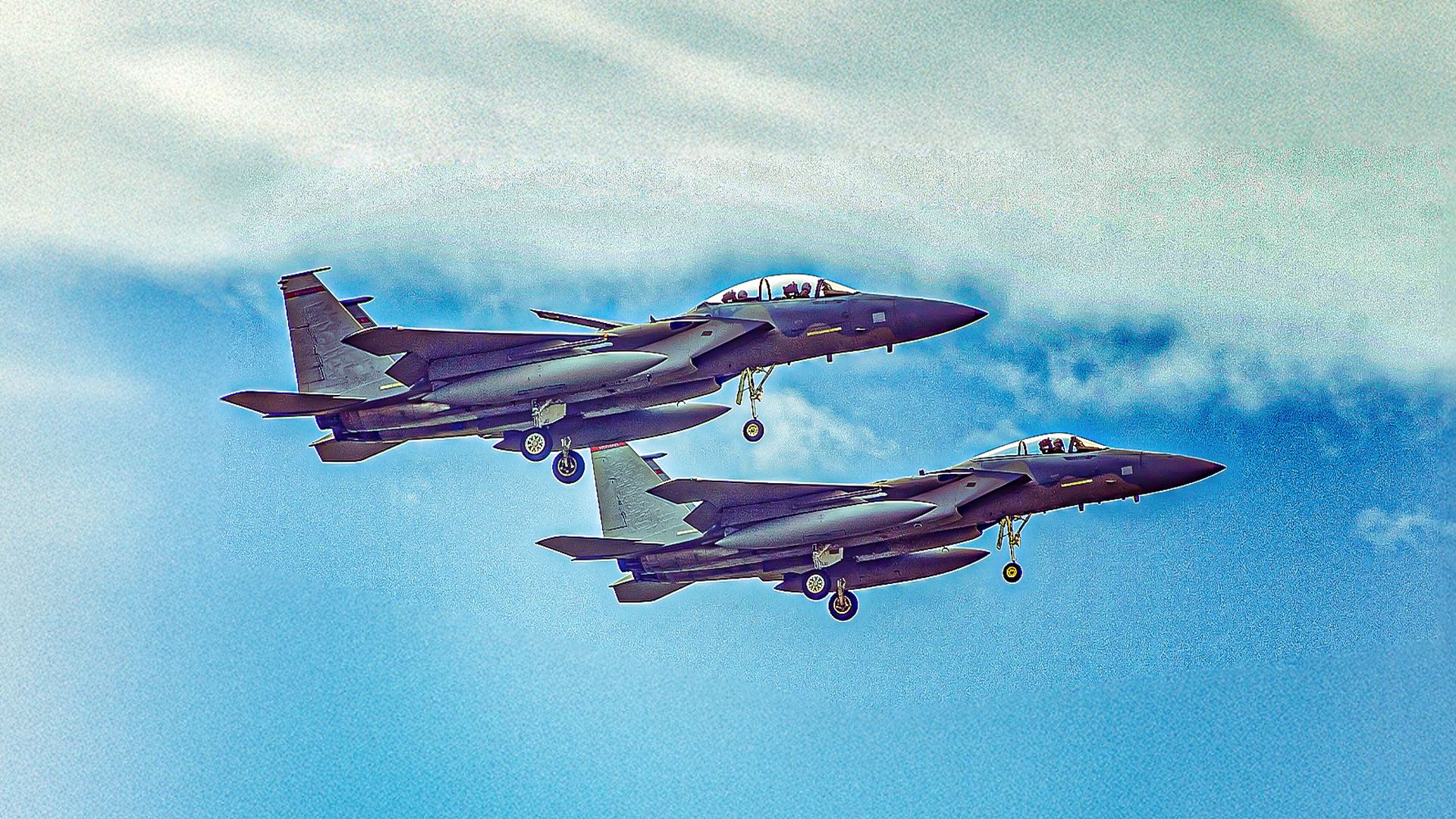
Comparing the speeds of fighter jets offers insight into their design and operational roles. The F-15 Eagle family outpaces the F-35 Lightning II in terms of raw speed, yet both aircraft serve unique purposes within the United States Air Force (USAF) framework. The F-15 Eagle boasts a maximum operational speed of around 1,875 miles per hour (approximately 3,017 kilometers per hour), translating to about Mach 2.5 at altitude. In contrast, the F-35 Lightning II has a capped top speed of approximately 1,200 miles per hour (around 1,931 kilometers per hour) or Mach 1.6.
The design principles behind these jets reflect their historical contexts. The F-15 Eagle, developed in the 1970s, was primarily intended as an air superiority fighter. Meanwhile, the F-35, designed as a stealthy multirole striker, emphasizes different capabilities beyond mere speed. This article explores the specifications and strategic values of both aircraft.
Raw Speed and Performance Specifications
When examining top speeds, the F-15 Eagle clearly holds an advantage. According to the USAF, the F-15, including its variant, the F-15E Strike Eagle, can achieve speeds of approximately 1,875 mph. This remarkable capability allows it to outpace many modern fighters, including the F-22 Raptor and the F-35.
The design choices made for the F-15, featuring a twin-engine layout and large inlets, prioritize high-altitude performance and speed. As a result, it excels in intercepting high-flying bombers and outmaneuvering potential threats.
In contrast, the F-35 Lightning II was not engineered for speed records. Lockheed Martin’s official specifications highlight its focus on stealth, sensor fusion, and situational awareness rather than raw speed. The F-35’s design minimizes radar and infrared signatures, sacrificing top-end speed for low observability.
Here are key specifications from the USAF for both aircraft:
– **F-15 Eagle**
– Maximum speed at altitude: 1,875 miles per hour (3,017 km/h)
– Service ceiling: 65,000 feet (19,812 meters)
– Engines: 2x Pratt & Whitney F100
– Primary role: Air superiority fighter
– **F-35 Lightning II**
– Maximum speed at altitude: 1,200 miles per hour (1,931 km/h)
– Service ceiling: 50,000 feet (15,240 meters)
– Engines: 1x Pratt & Whitney F135
– Primary role: Stealth multirole strike fighter
Maneuverability and Operational Use
While speed is a critical factor, it does not provide a complete picture of a fighter aircraft’s combat capabilities. Altitude and climb rate are equally important, influencing a pilot’s options in combat scenarios. The F-15’s service ceiling of 65,000 feet allows for high-maneuverability engagements, which have contributed to its impressive combat record.
Both aircraft exhibit high maneuverability, with the F-15’s performance making it resemble a classic fighter, particularly in air-to-air engagements where stealth is less critical. The F-35, with its lower ceiling at 50,000 feet, is still capable of effective long-range missile deployments and efficient cruise performance.
Powering these jets are advanced engines that deliver impressive thrust. The F-15 Eagle utilizes two Pratt & Whitney F100 engines, producing over 58,000 pounds of thrust combined, while the F-35’s Pratt & Whitney F135 engine generates around 40,000 pounds of thrust. This configuration gives the F-15 an edge in acceleration and sustained performance at higher speeds.
Both aircraft are designed for specific operational roles. The F-15 excels in scenarios requiring rapid interception and high-speed maneuvers, while the F-35 is optimized for stealth and networked operations. During actual combat missions, both jets typically operate at high-subsonic speeds, prioritizing fuel efficiency and sensor integration over achieving maximum velocity.
In conclusion, the F-15 Eagle is a faster aircraft, demonstrating superior speed and altitude capabilities. However, the F-35 Lightning II offers advanced stealth and multirole functionality, making it a vital asset in modern air combat. The choice between these aircraft ultimately depends on the mission requirements, with each jet fulfilling different strategic needs within the USAF.