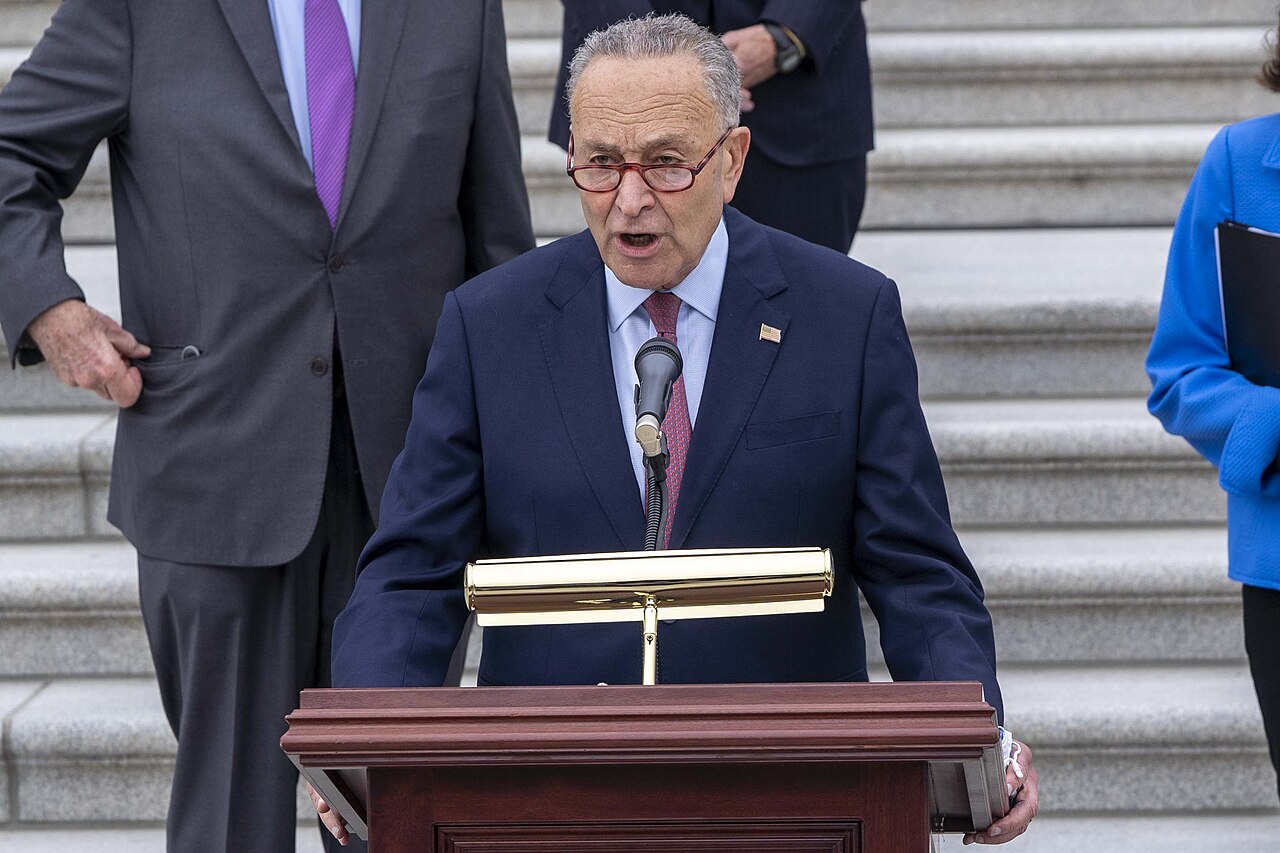
Senate Minority Leader Chuck Schumer has criticized the U.S. Department of Justice (DOJ) for failing to meet a legal deadline regarding the release of records related to Jeffrey Epstein. On Friday, Schumer described the DOJ’s decision to withhold certain documents as a violation of federal law. This statement follows comments from Deputy Attorney General Todd Blanche, who confirmed to Fox News that the DOJ plans to publish “several hundred thousand documents” related to Epstein and his associate Ghislaine Maxwell. However, Blanche indicated that a significant portion of these materials would not be released by the statutory deadline, with plans to provide them in the coming weeks.
Blanche defended the DOJ’s approach by stating that redactions are necessary to protect the privacy and identities of Epstein’s victims. He emphasized the importance of safeguarding sensitive information, saying, “We are looking at every single piece of paper that we are going to produce, making sure that every victim…is completely protected.”
Despite these assurances, Schumer’s office issued a statement condemning the DOJ’s actions. The statement accused the department, along with former President Donald Trump and Attorney General Pam Bondi, of attempting to obscure the truth. Schumer’s team is collaborating with attorneys representing Epstein’s victims and outside legal experts to evaluate which documents are being withheld and what information might be concealed. “We will not stop until the whole truth comes out,” the statement declared.
The controversy surrounding the DOJ’s decision has drawn bipartisan attention. Representative Ro Khanna, a co-sponsor of the Transparency Act, called for a clear timeline for the complete release of all materials. He criticized the DOJ for failing to engage in discussions about the logistics of document release, stating, “They have had months to prepare for this.”
The Epstein Files Transparency Act, which passed with strong bipartisan support and was signed into law by Trump on November 19, 2025, mandates the DOJ to make public all unclassified records related to Epstein and Maxwell within 30 days of enactment. Representative Thomas Massie, also a co-sponsor of the act, warned that legal consequences could follow if the DOJ does not comply. He highlighted the law’s stipulation, “Not later than 30 days after the date of enactment of the Act,” emphasizing the requirement for “all” documents to be released.
As the situation develops, the DOJ’s actions regarding the Epstein files remain under scrutiny, with advocates for the victims pressing for transparency and accountability. The ongoing discussions will likely shape future interactions between lawmakers and the DOJ, particularly concerning the handling of sensitive information in high-profile cases.