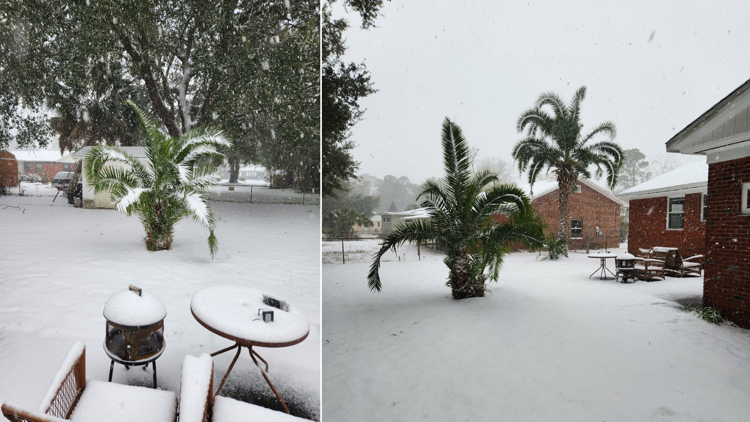
A rare winter storm transformed parts of the southern United States into a picturesque winter scene on January 21, 2025. Regions in Texas, Louisiana, and Florida experienced significant snowfall, surprising residents accustomed to milder winter conditions. A sprawling 1,500-mile area saw heavy snow accumulation that disrupted daily life, with some areas resembling a holiday movie set.
In Louisiana, more than 6 inches of snow fell near Baton Rouge, while the Louisiana Delta recorded between 8 to 12 inches. The Florida Panhandle also faced similar snowfall, creating scenes of white-coated palm trees. This unexpected weather forced highway closures and school cancellations, leaving many locals, some seeing snow for the first time, scrambling to find snow shovels.
While snow is a rarity in the Deep South, it is not entirely unprecedented. Each few years, a wave of frigid Arctic air can travel southward, interacting with moist Gulf air to create snowfall. Cities like Atlanta, Birmingham, and Jackson have recorded snow in the last decade, and even Houston has occasionally woken up to a blanket of white.
Southern states are not equipped for such winter weather. Unlike their northern counterparts, which have extensive fleets of snowplows and salt trucks, southern cities lack the infrastructure to manage even small amounts of snow. A mere inch of snowfall can lead to widespread disruptions, including traffic accidents and gridlock. When a “Winter Storm Warning” is issued in these regions, the criteria differ significantly from northern states. For instance, the threshold in states like Minnesota and Michigan is typically at least 6 inches, but in southern areas, a warning can be issued for just 1 to 2 inches.
The National Weather Service has established these lower thresholds due to the rarity of snow and the severe impacts it can cause. In Alabama and Mississippi, even minimal snowfall can lead to hazardous road conditions, school closures, and potential power outages from ice accumulation. The combination of heavy, wet snow and freezing temperatures creates dangerous conditions, which are exacerbated by the lack of proper snow removal resources.
Snowfall is not limited to the continental U.S. In Hawaii, snow forms on the tallest volcanic peaks, Mauna Kea and Mauna Loa, which rise nearly 14,000 feet above sea level. These peaks often receive several feet of snow during winter storms, showcasing a unique aspect of Hawaiian weather where residents can surf in the ocean during the day and enjoy snowball fights on the mountains by evening. Locals refer to this phenomenon as “pōhaku hau,” meaning “snow rock.”
Florida’s experience with snow is notably infrequent, making any snowfall a memorable event. The most notable instance occurred on January 19, 1977, when snow fell as far south as Miami. This marked the only recorded snowfall in the city, with residents reminiscing about the rare sight of snowflakes against palm trees. Since then, northern parts of Florida, including Tallahassee and Pensacola, have seen sporadic snowfall during major Arctic cold waves.
Each state in the U.S. has recorded snowfall at some point, from the beaches of the Gulf Coast to the volcanic peaks of Hawaii. The unique blend of cold air and humidity creates conditions for snowfall in unexpected places. In southern states, even a small amount of snow can bring daily life to a standstill. Roads are not designed for freeze-thaw cycles, vehicles often lack snow tires, and cities do not maintain snow removal fleets for events that occur every few years. When snow does fall, it tends to melt quickly, creating ice that poses further risks for drivers.
As communities in the southern U.S. reflect on this extraordinary event, the impacts of such winter weather serve as a reminder of the unpredictability of climate and weather patterns across the country. Residents are left with the memories of an unusual winter wonderland that momentarily transformed their familiar landscapes.