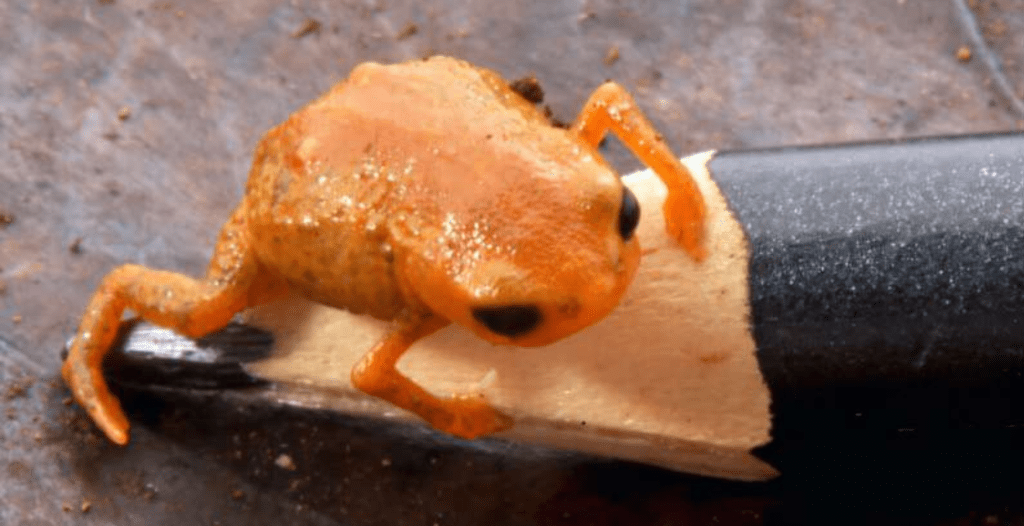
URGENT UPDATE: A newly identified species of pumpkin toadlet has been discovered in the mountains of southern Brazil, sparking excitement among researchers and conservationists alike. This tiny amphibian, measuring less than a Tic Tac, boasts a vibrant orange hue reminiscent of a traffic cone, and its official naming as Brachycephalus lulai marks a significant breakthrough in the study of rare species.
Researchers from a dedicated team have been surveying the Serra do Quiriri range in Santa Catarina for over seven years, focusing on the unique orange frogs that inhabit this biodiverse region. The toadlet was located at an impressive altitude of more than 750 meters (2,460 feet) above sea level, hidden within leaf litter. The discovery was made possible by tracking the males’ mating calls, while the elusive females were collected “haphazardly” for further study.
The team’s findings, published in PLOS One, confirm that the B. lulai is a distinct species with its own lineage, rather than a variation of known frogs. The species is named in honor of Brazilian President Luiz Inácio Lula da Silva, with hopes that this recognition will bolster conservation efforts for the critically endangered Atlantic rainforest.
While the current status of the pumpkin toadlet is classified as “least concern,” indicating it is not in immediate danger, the surrounding environment is under severe threat from human activities. Deforestation, grazing, tourism, and invasive species have decimated many local amphibian populations, making them among the most threatened vertebrates globally.
The researchers emphasize the urgency of their fieldwork, which is notoriously challenging due to the dense forest and difficult terrain. The survival of species like the B. lulai hinges on ongoing conservation efforts, as many frogs are confined to small mountaintop habitats. If these areas are overlooked, these remarkable creatures may vanish without a trace.
Brazilian officials are currently discussing the establishment of a federal conservation unit in the region. This initiative aims to protect the delicate ecosystem without necessitating the purchase of private land, reflecting a growing commitment to preserving biodiversity.
As the world watches, the tiny pumpkin toadlet serves as a poignant reminder of the fragility of nature and the pressing need for ecological stewardship. Scientists urge immediate action to safeguard the habitats of these unique species before it is too late. The clock is ticking, and the future of many amphibians hangs in the balance.
Stay tuned as we continue to follow this developing story and the potential implications for conservation in Brazil.