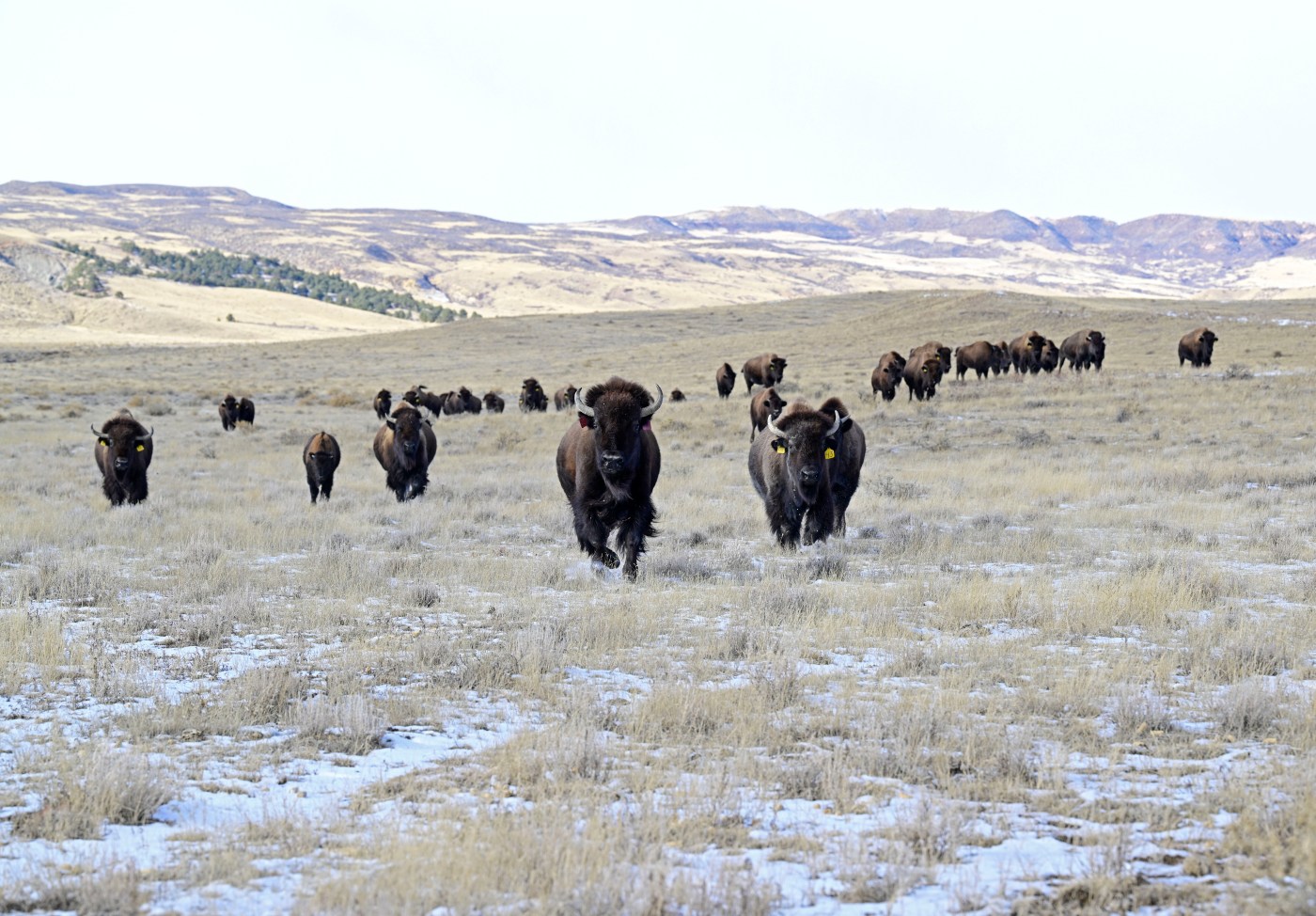
UPDATE: In a groundbreaking conservation effort, the Larimer County bison herd is transforming the future of purebred bison across the United States. After intensive collaboration with Colorado State University (CSU) and the United States Department of Agriculture (USDA), this initiative has successfully introduced nearly 200 purebred bison to various herds nationwide, with a significant focus on tribal lands.
This urgent update comes as the bison population, once decimated by overhunting in the late 19th century, shows signs of recovery. The revival is crucial not only for ecological reasons but also for cultural revitalization among Native American tribes who deeply value these animals.
The journey began a decade ago when researchers sought to create a healthy, brucellosis-free herd. Brucellosis, a contagious disease primarily affecting livestock, posed a severe threat to the bison population in Yellowstone National Park, complicating efforts to breed and transfer these animals. CSU’s Professor Jennifer Barfield led pioneering research that enabled the breeding of healthy calves, utilizing techniques similar to those used in human infertility treatments.
Today, the Larimer County herd thrives on the Soapstone Prairie Natural Area, where they were released on November 1, 2015. Currently, there are 59 bison in the area, including both adults and calves, cared for by CSU bison manager Matt McCollum and students who ensure the herd receives proper nutrition and care.
The bison’s reintroduction is more than a conservation milestone; it symbolizes a return to heritage for many tribes. As Barfield notes, “For many communities, it can be revitalization of the land, it can be cultural revitalization for tribes.” The effort aims to reconnect youth with traditional ways and strengthen the ecological balance in the region.
The impact is profound. Local officials report that the bison serve as a keystone species, enhancing the ecosystem while fostering a sense of connection to the past. As the herd continues to grow and contribute to conservation efforts, it stands as a testament to the collaborative spirit between the CSU, USDA, and local communities.
As of now, the Larimer County bison herd is poised to play a significant role in the ongoing efforts to restore bison populations across the U.S. The crucial next steps involve monitoring health and continuing to distribute purebred bison to new habitats, ensuring that these majestic creatures roam the plains once more, as they did over a century ago.
This urgent conservation story emphasizes the importance of collaboration in restoring natural ecosystems and cultural identities. Stay tuned for more updates as the bison herd continues to thrive and expand its influence across the country.